
May 9 @ SAT : Material play
Duration: 3 hours
Time: 10am - 1pm
Location: SAT
Facilitators: Priyanka, Sahil, Anam, Laura
Illustrations by: Irushi Tennekoon
Youtube link is 5 mins, feel free too skip last part…https://youtu.be/3Ylt0iRL8bA
-
Lesson Objectives
By the end of this workshop, students will have:
Explored group dynamics and collaboration
Explore materials and their qualities
Explore structures and forces physically in space.
Negotiate with each other and made decisions
Prototype in a safe space without worrying
You will need:
For Warm up:
A tray of sand (even going outside to try this is ok)
Books from the library (to use as weights)
Ekel sticks or reed sticks - something suitable to Sharjah that doesn’t look like it has firmness on it’s own
For Main Activity:
Some dice to roll
Fabric
Reed / ekel sticks
String (Jute)
Sand or clay
Cardboard
Paper
Water
Recycled plastic bottles
Craft supplies: Scissors, Tape, glue, Stapler, ruler
Sketch supplies: pencil, pen, eraser, sketchbook
Classroom setup:
3-4 tables (same as last week) ideally 1 team per table
(nice to have) As students walk in, a few material samples that they will be using in the class can be placed on the tables for them to touch and manipulate.
Have extra chairs around each table for when facilitators join the ‘teams’. Everyone is at the same level.
Program Summary:
Our challenge today is to test out combinations and arrangements materials that look flimsy on it’s own, but can be very strong when assembled a certain way. for example, if you fold a paper it will be strong.
Extra points for the team that uses the LEAST material to hold up the MOST weight; as well as for increased capacity for delight and joy.
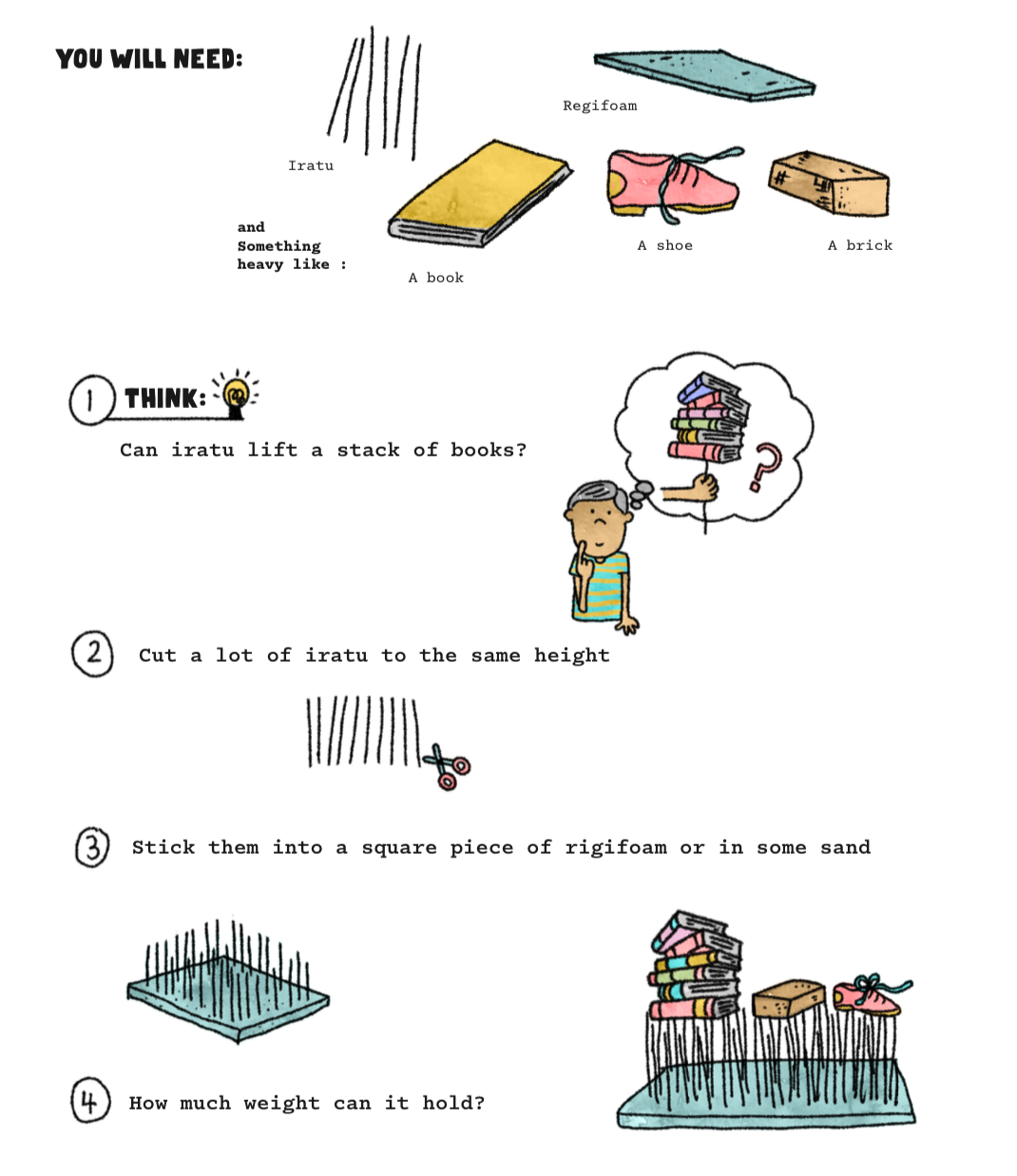
Warm up: Reed Stick strength challenge (20 mins): (iratu= ekel)
Divide class into 3-4 teams
Ask them to insert a bunch of sticks in the sand and see if they can make a book hold up.
What is the limit? See how many books will hold up.
Walk around SAT (10-20 mins)
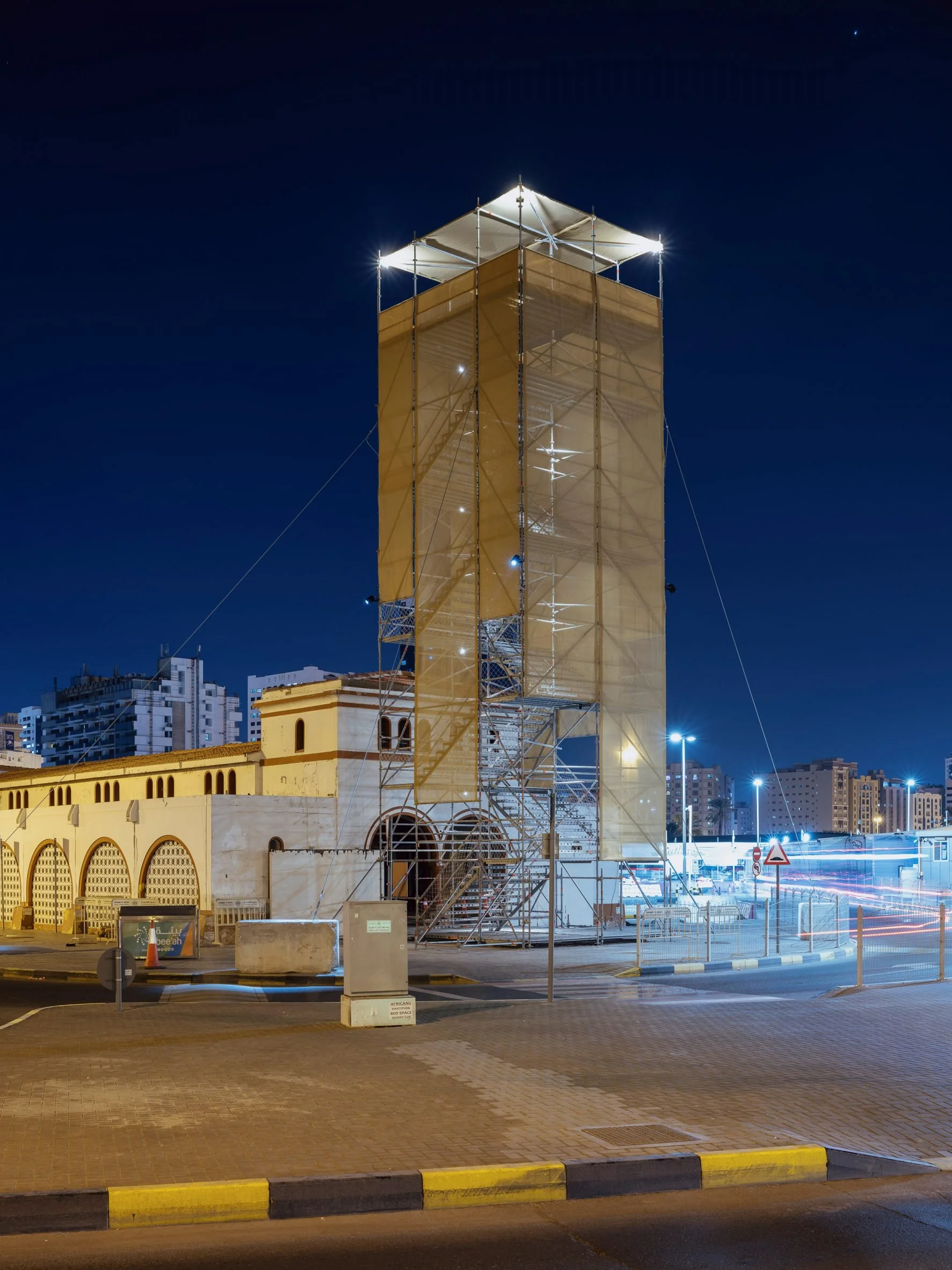
If you do this workshop outside, take a meandering 10 minute route back to class, and observe various natural and manmade materials created to hold weight (bench), provide shade (SAT participant canopies, trees) or span a great length (lightweight roof truss) or height (water tower). A triangle is the strongest shape in nature. Where can you notice triangles on the tour?
Snack break can be during demonstration of materials and forces :)
Main Activity: (1.5 hour)
Step 1: if you feel short of time, skips this and just introduce verbally.
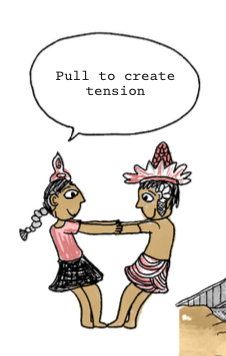
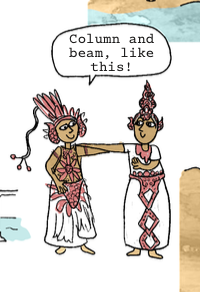
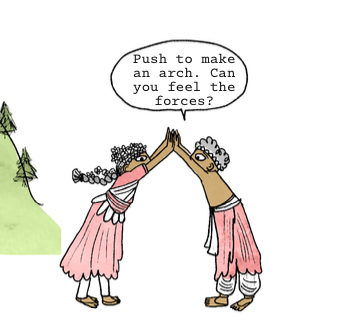
Physical demonstration of forces: Every structure holds weight the same two ways — pulling or pushing. A rope pulls tight: that's tension. A column gets squeezed: that's compression. Most structures use both at the same time, in different places.
Ask; ‘we need a few volunteers to help us demonstrate forces.Tension, Compression, beam, arch as indicated. If kids are uncomfortable with touch, you can also ask them to pull a rope or carry some books with their arms outstretched.
Step 2: Divide the class into 3-4 groups. Teams of 3-4 children is ideal. Mix up schools as much as possible.
Step 3: We’ll roll a dice for each group. The group with the lowest number gets to choose a material activity first, then the next lowest goes next, and so on.
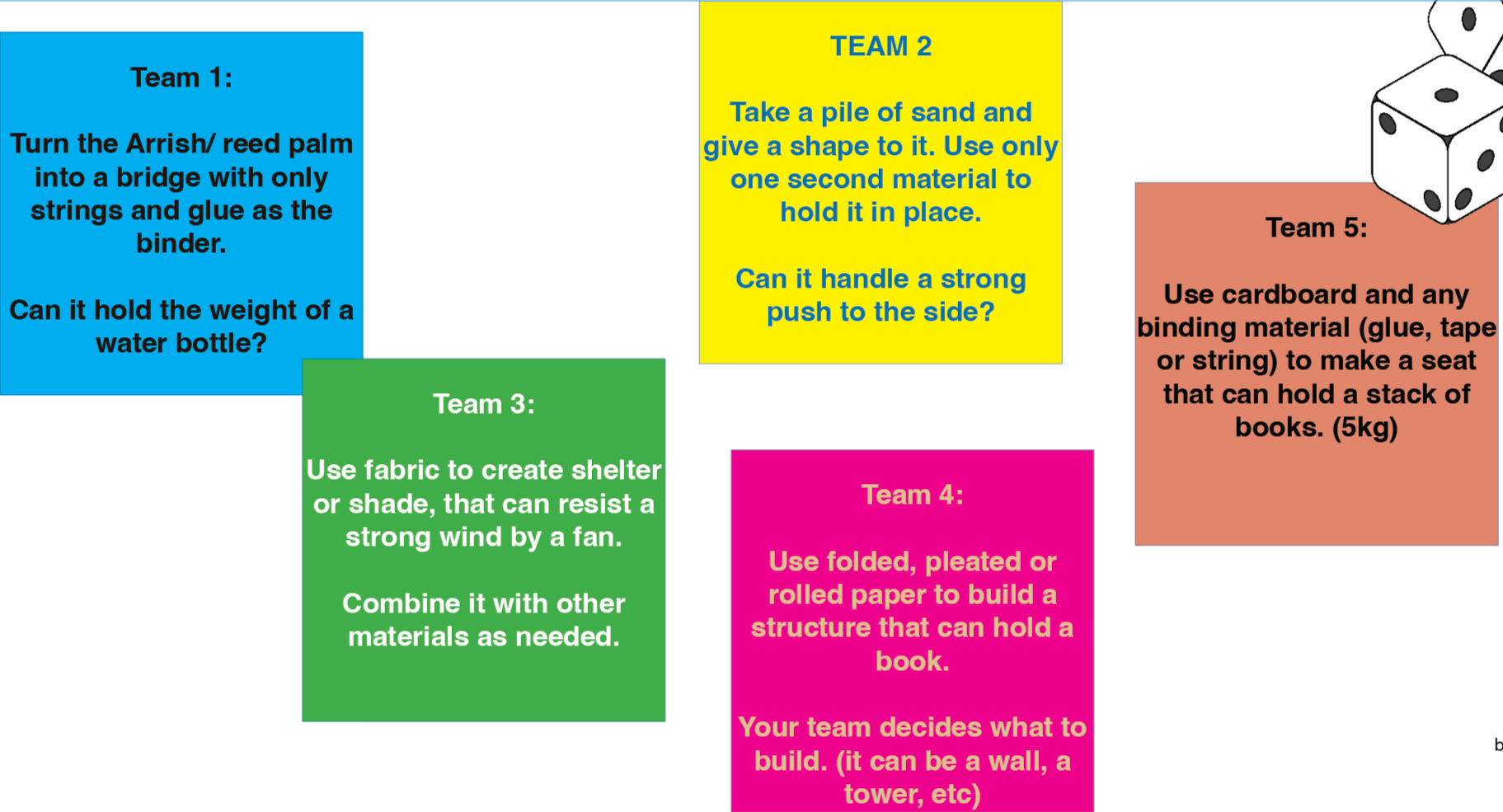
Team 1: Turn the Arrish/ reed palm into a bridge with only strings and glue as the binder. Can it hold the weight of a water bottle?
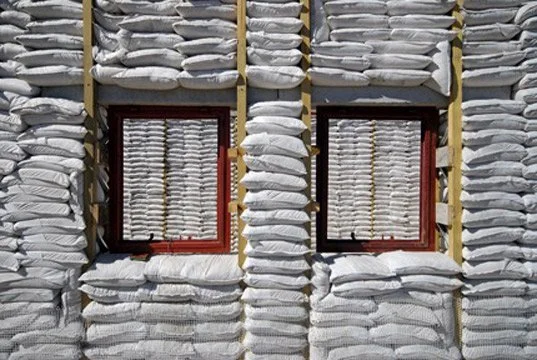
Team 2: Use sand and one other material to build a freestanding wall or tower that holds its shape.
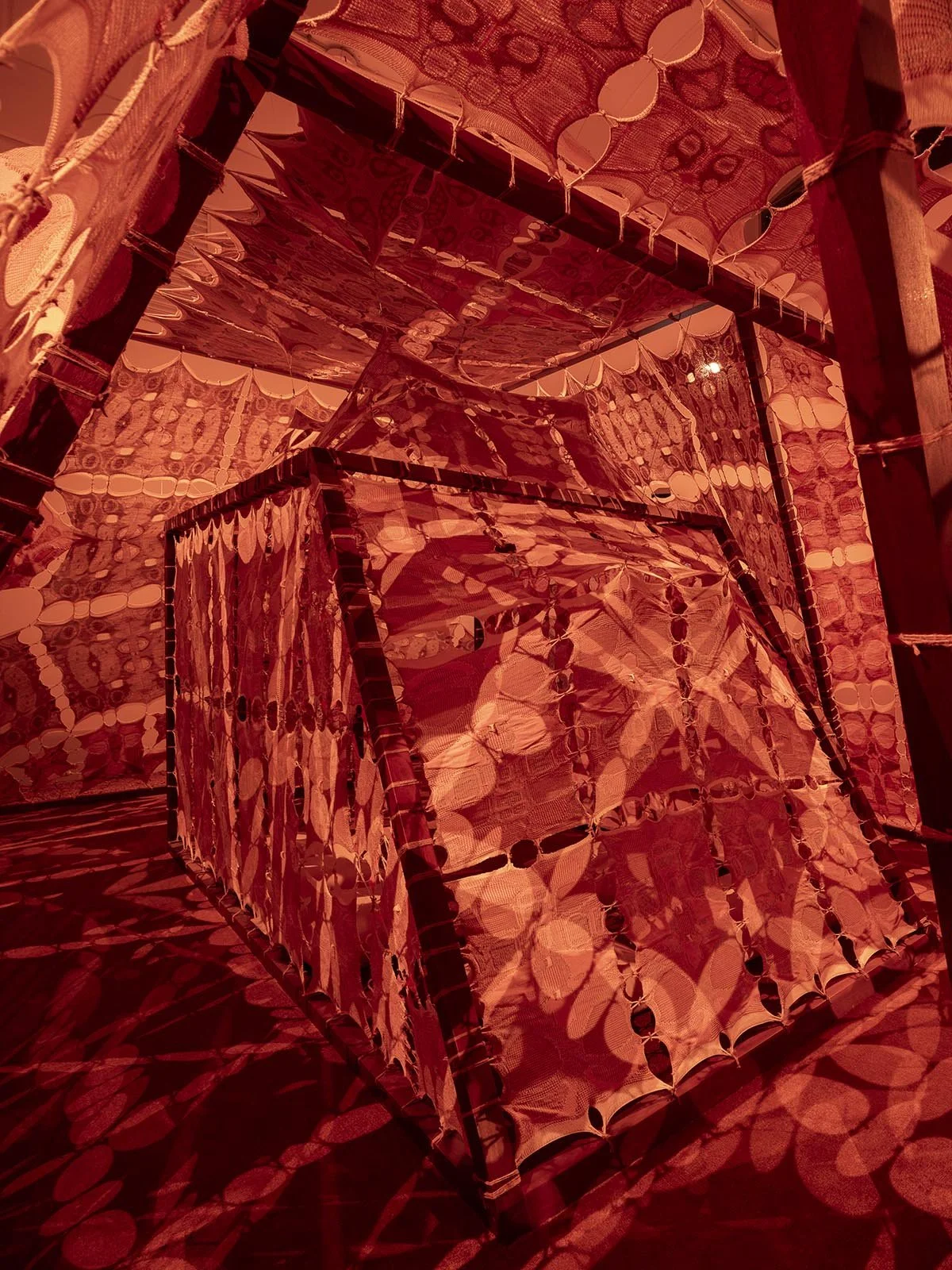
Team 3: Use fabric to create shelter or shade, that can resist a strong wind by a fan. Combine it with other materials as needed.
Team 4: Use folded, pleated or rolled paper to build a structure that can hold a book. Your team decides what to build. (it can be a wall, a tower, etc)
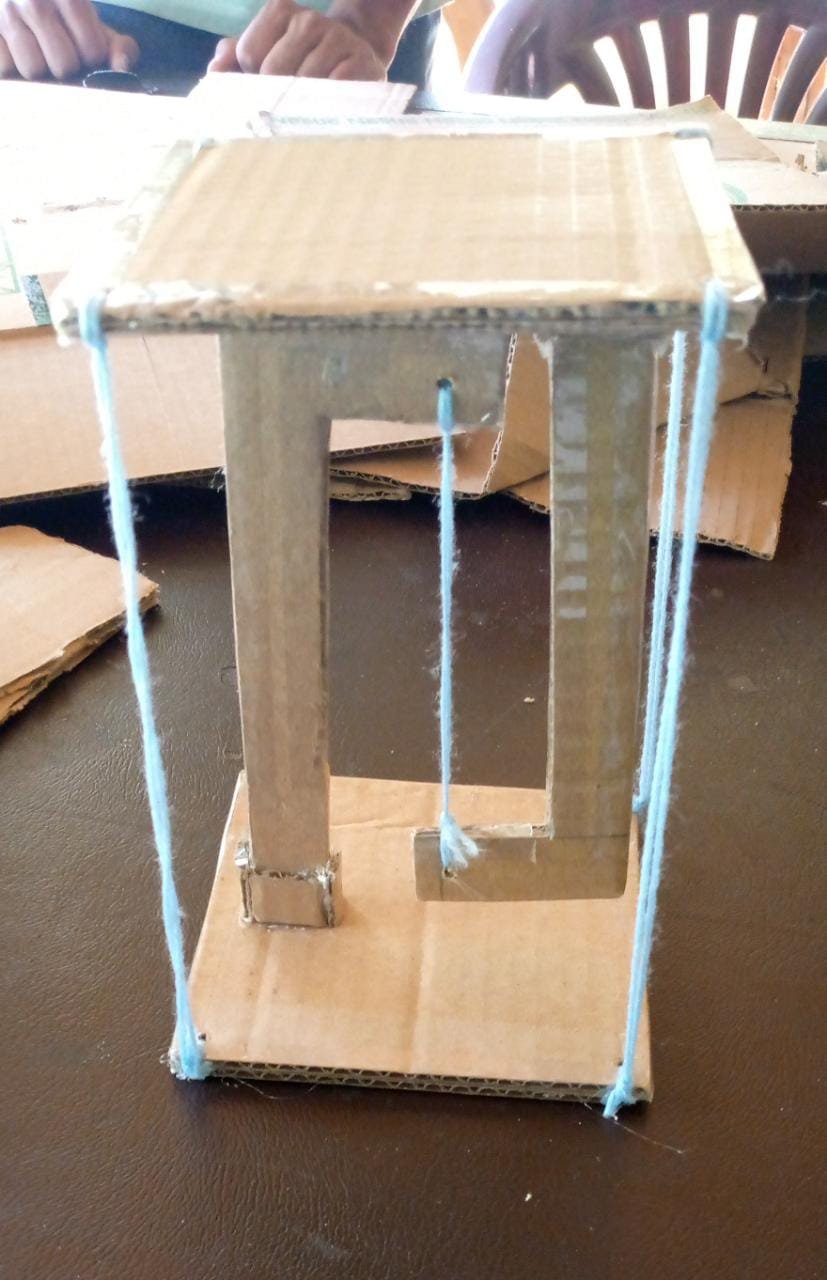
Team 5: Use cardboard and any binding material (glue, tape or string) to make a seat that can hold a stack of books. (5kg)
Step 4: Time to make! Play music. One adult should be a part of each team, but rotate every 20 minutes
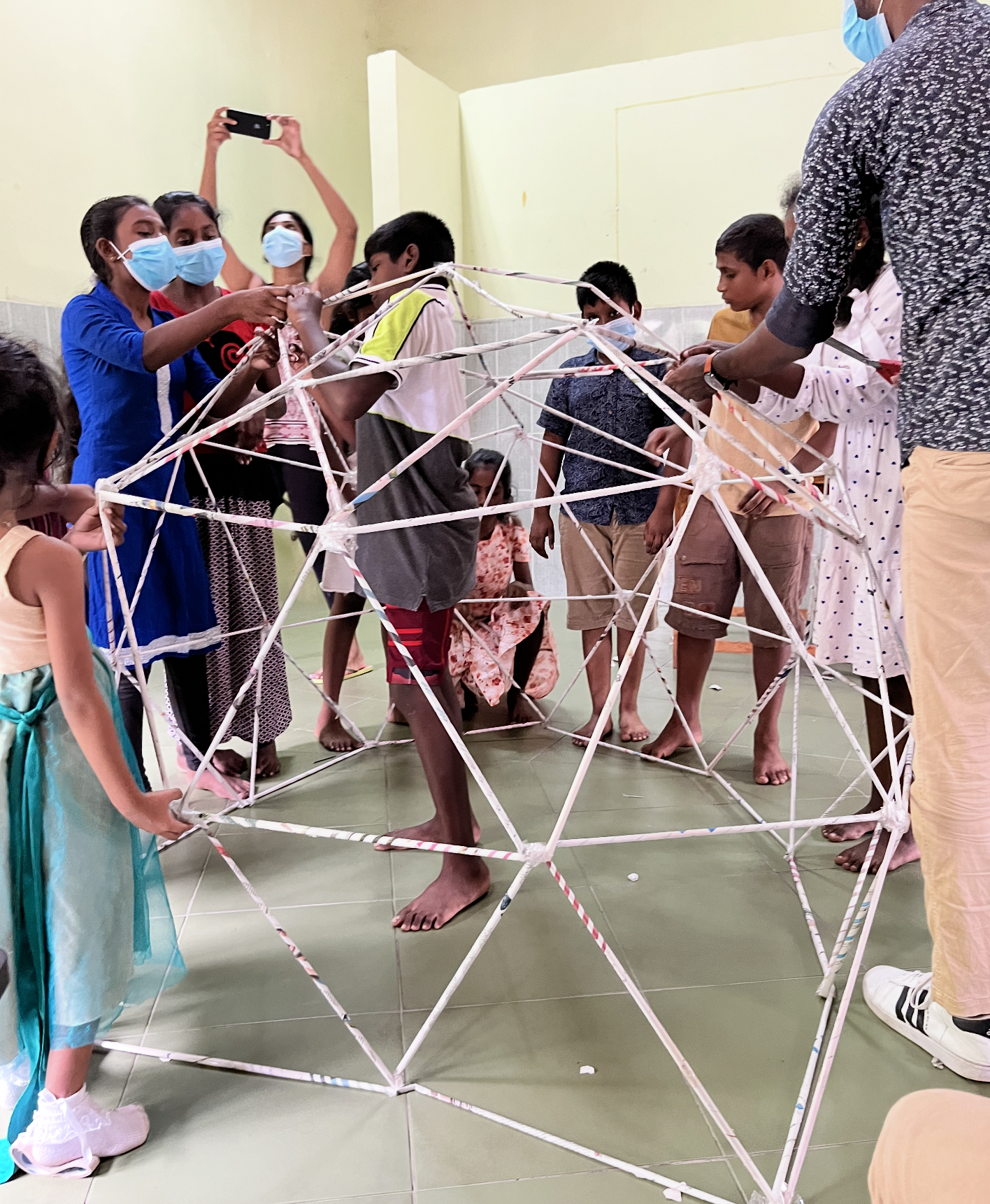
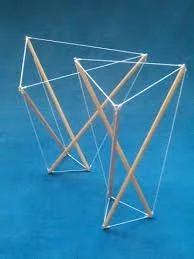
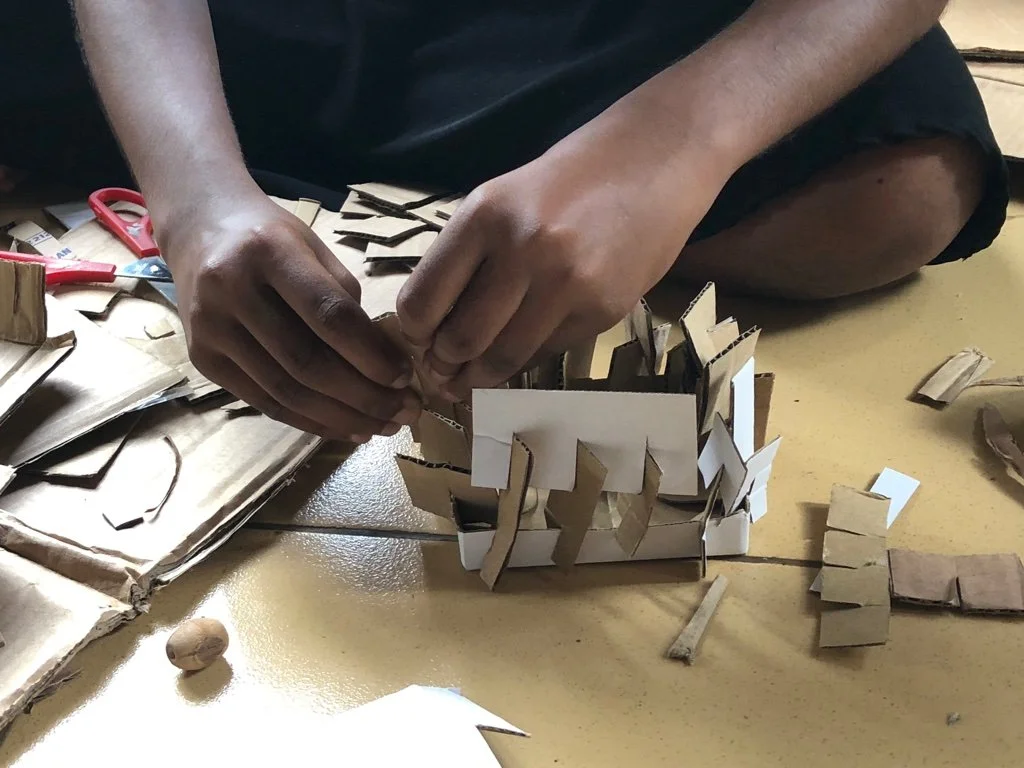
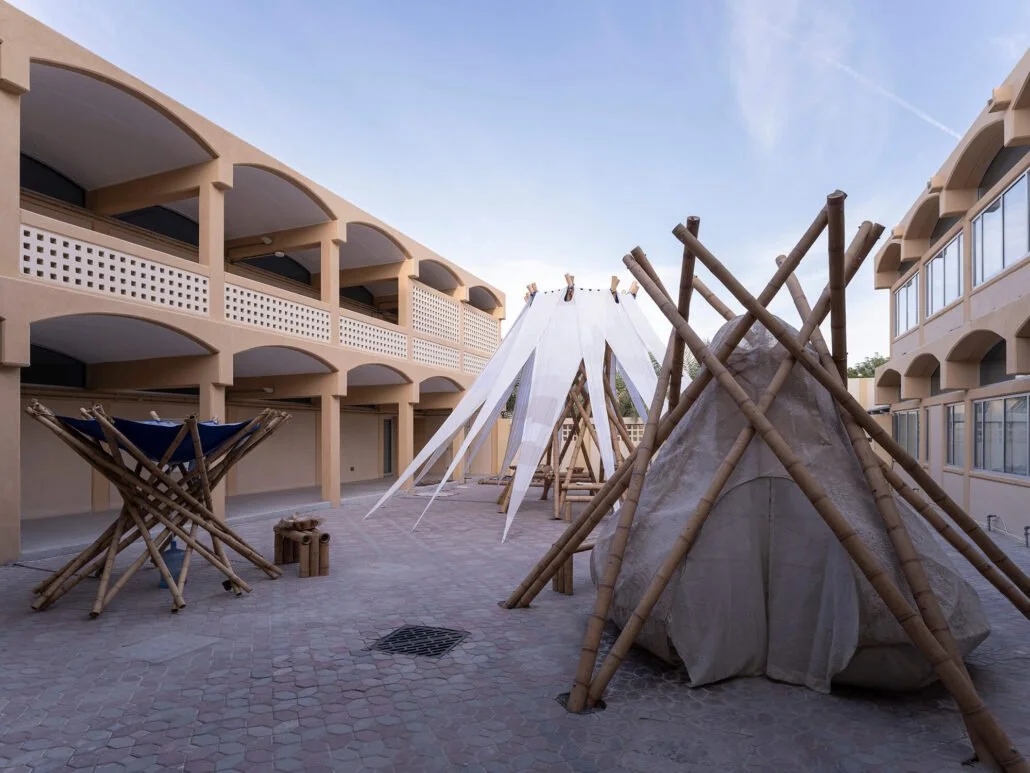
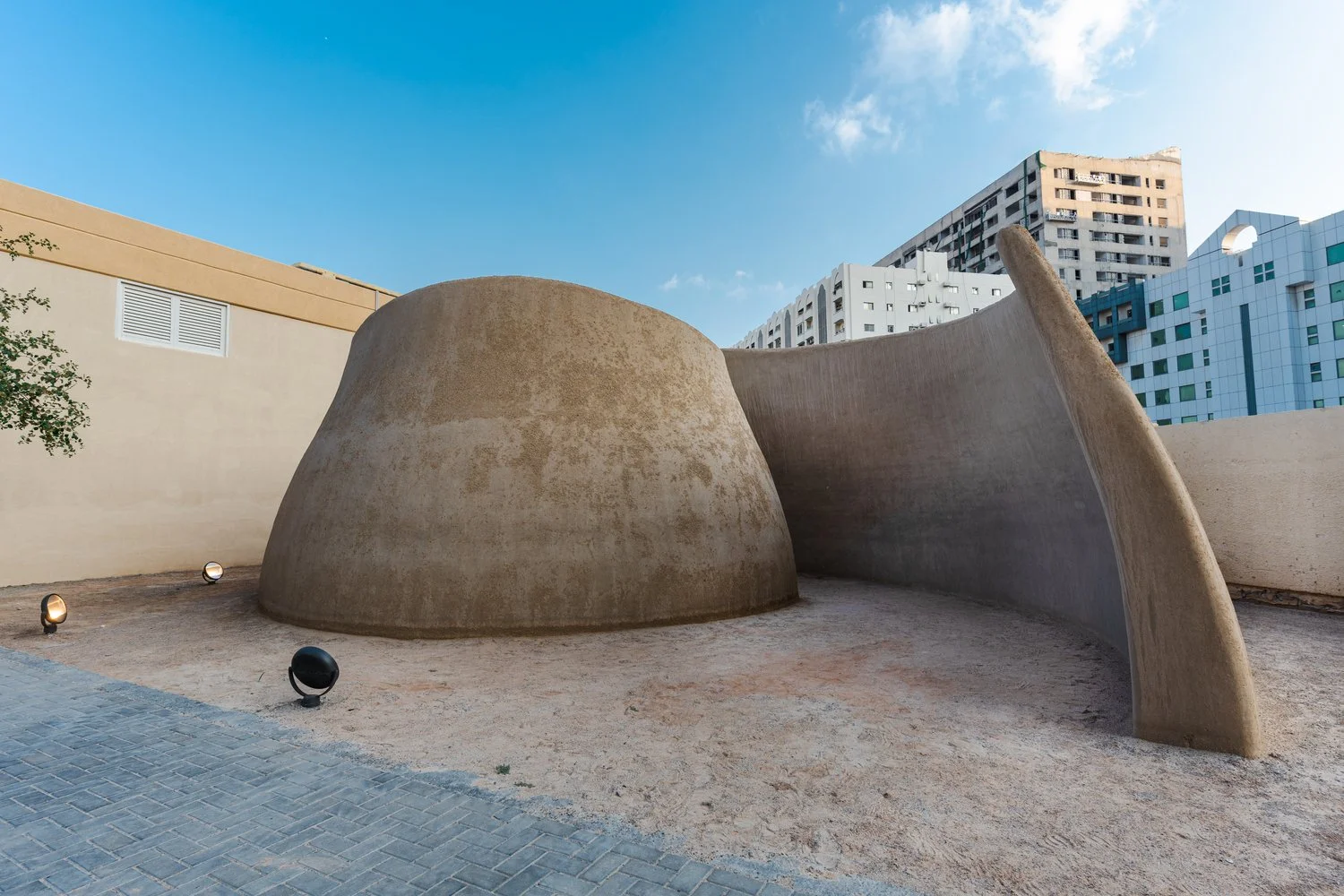
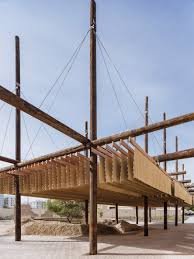
Inspo for Facilitators: (some of these are also on a slideshow)

Conclusion:
At the end of the class, let’s have a round of demonstrations. Teams present their ideas and what they discovered. Keep prompting the kids to continue speaking by saying phrases like ‘yes, and…?’ and asking questions.