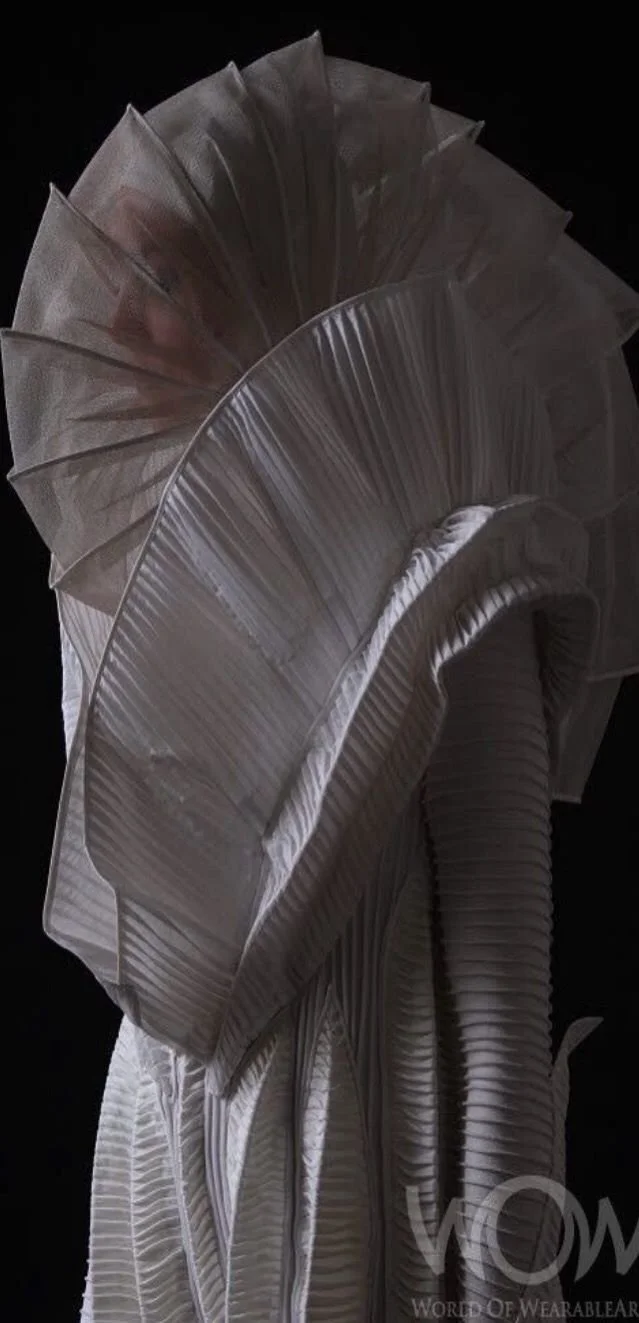
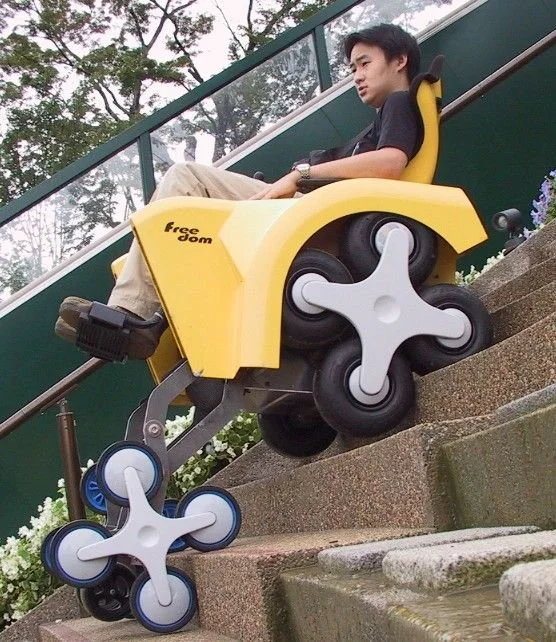
June 06 @ SAT : Architecture for the Body
Duration: 3 hours
Time: 10am - 1pm
Location: SAT
Facilitators: Priyanka, Sahil, Anam, Laura, Miley, Lizzie, Jess
Workshop Music suggestions (While participants are busy making)
Summary
Let’s pretend we are in 2088.
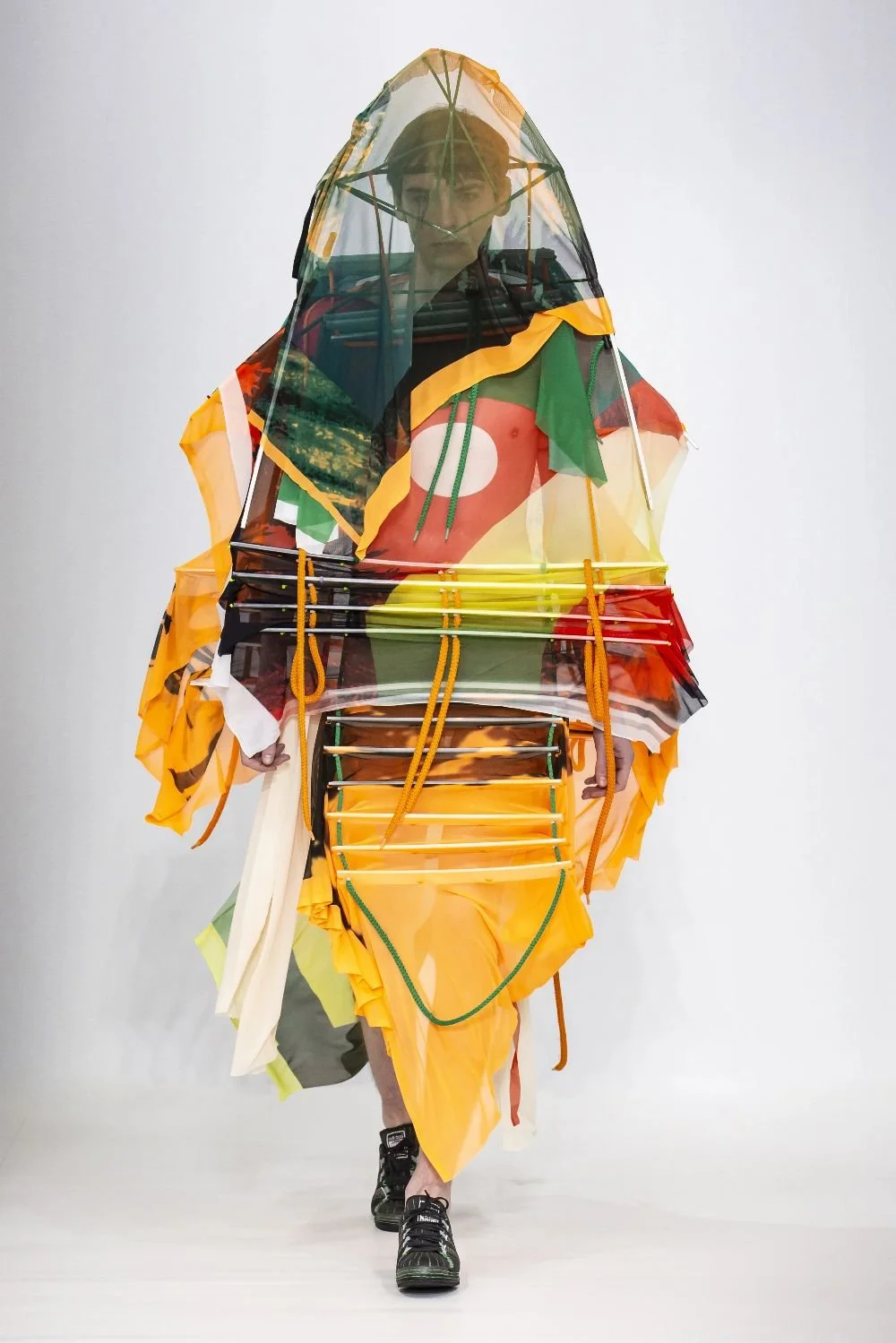
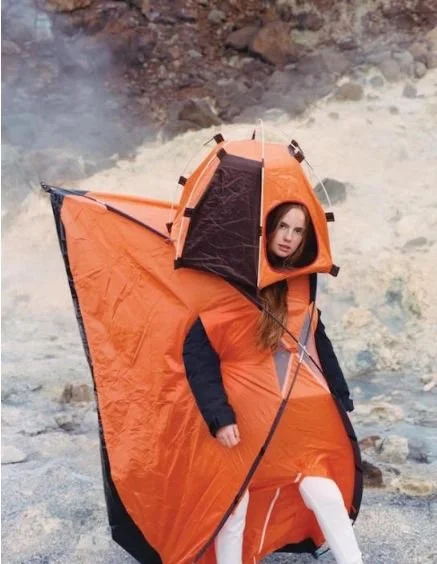
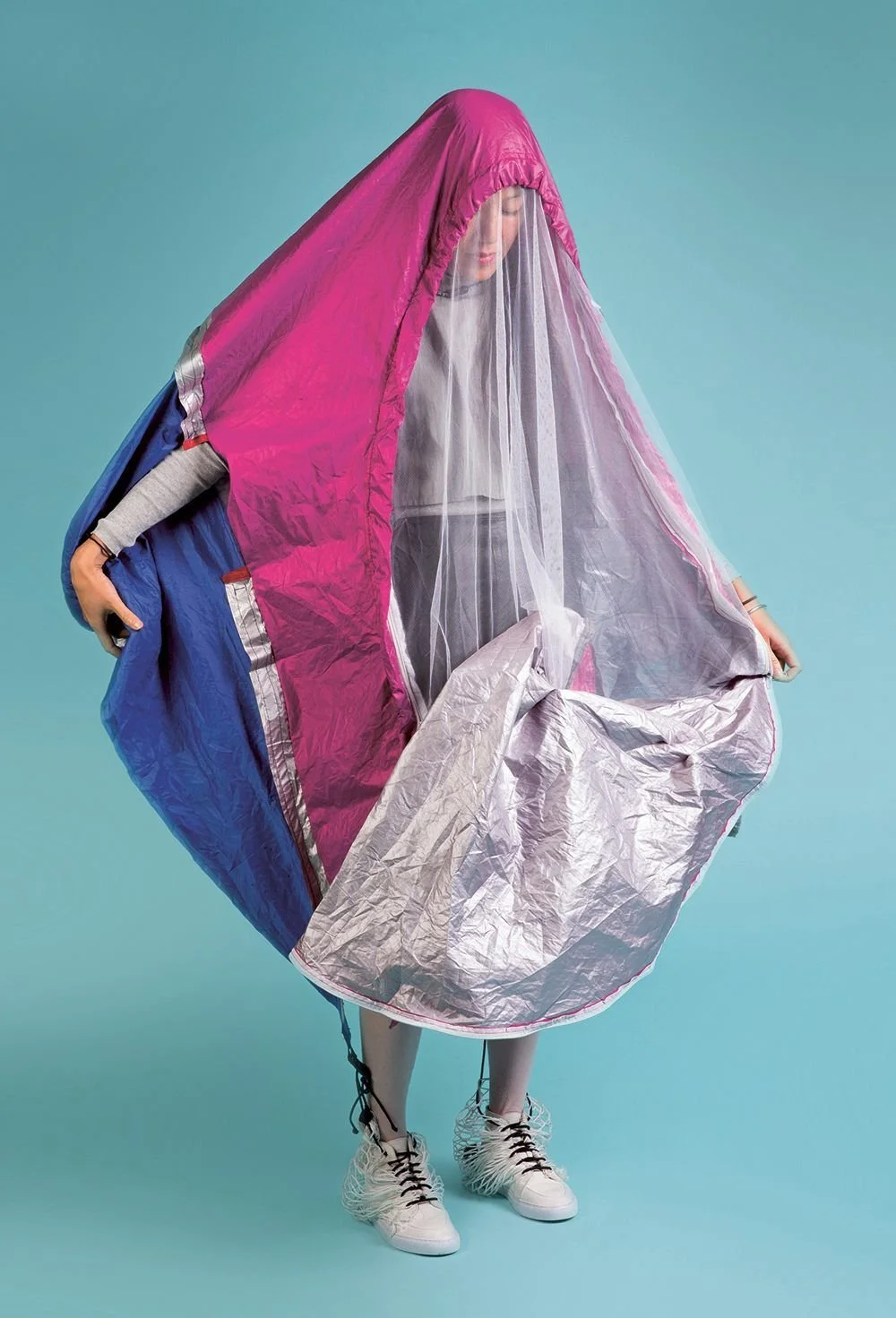
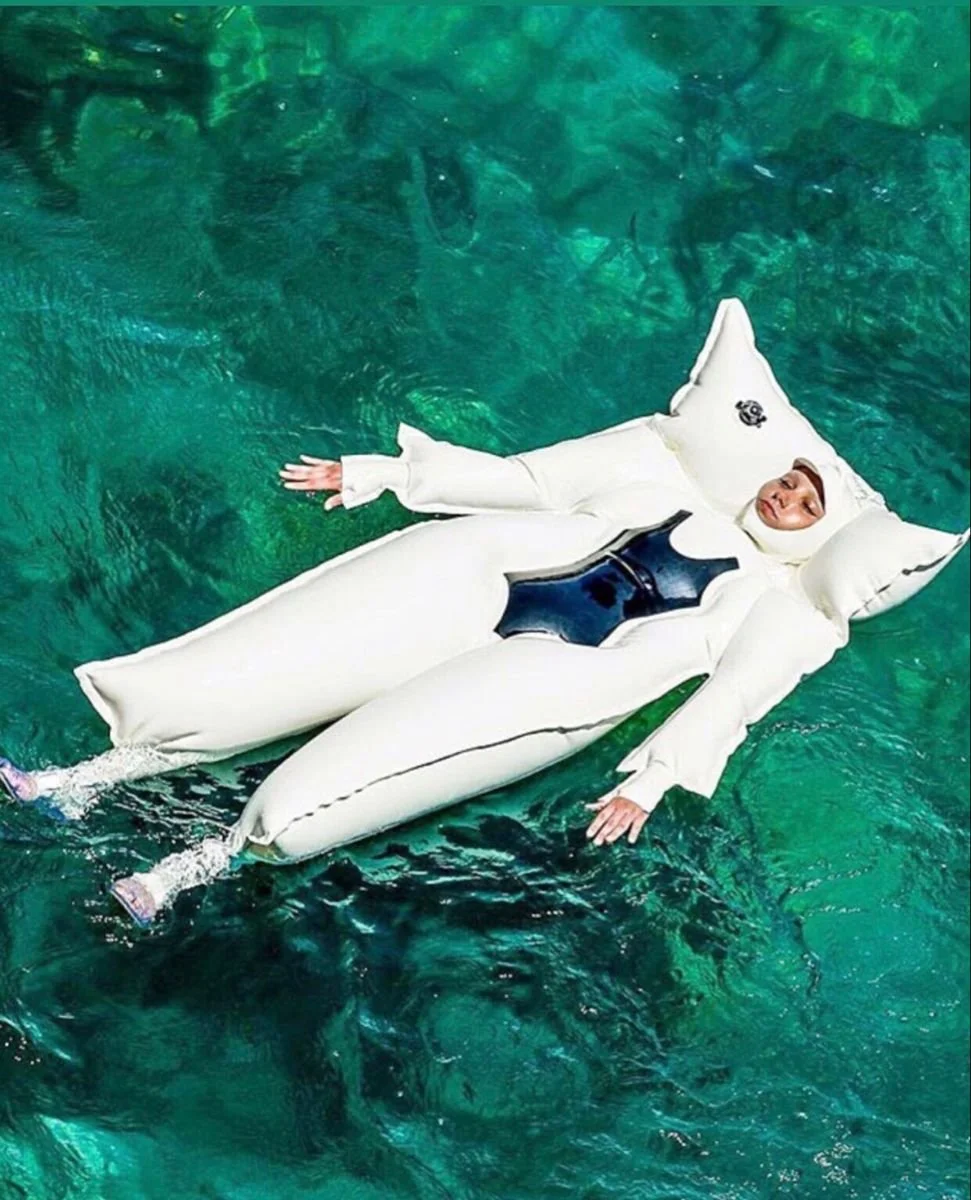
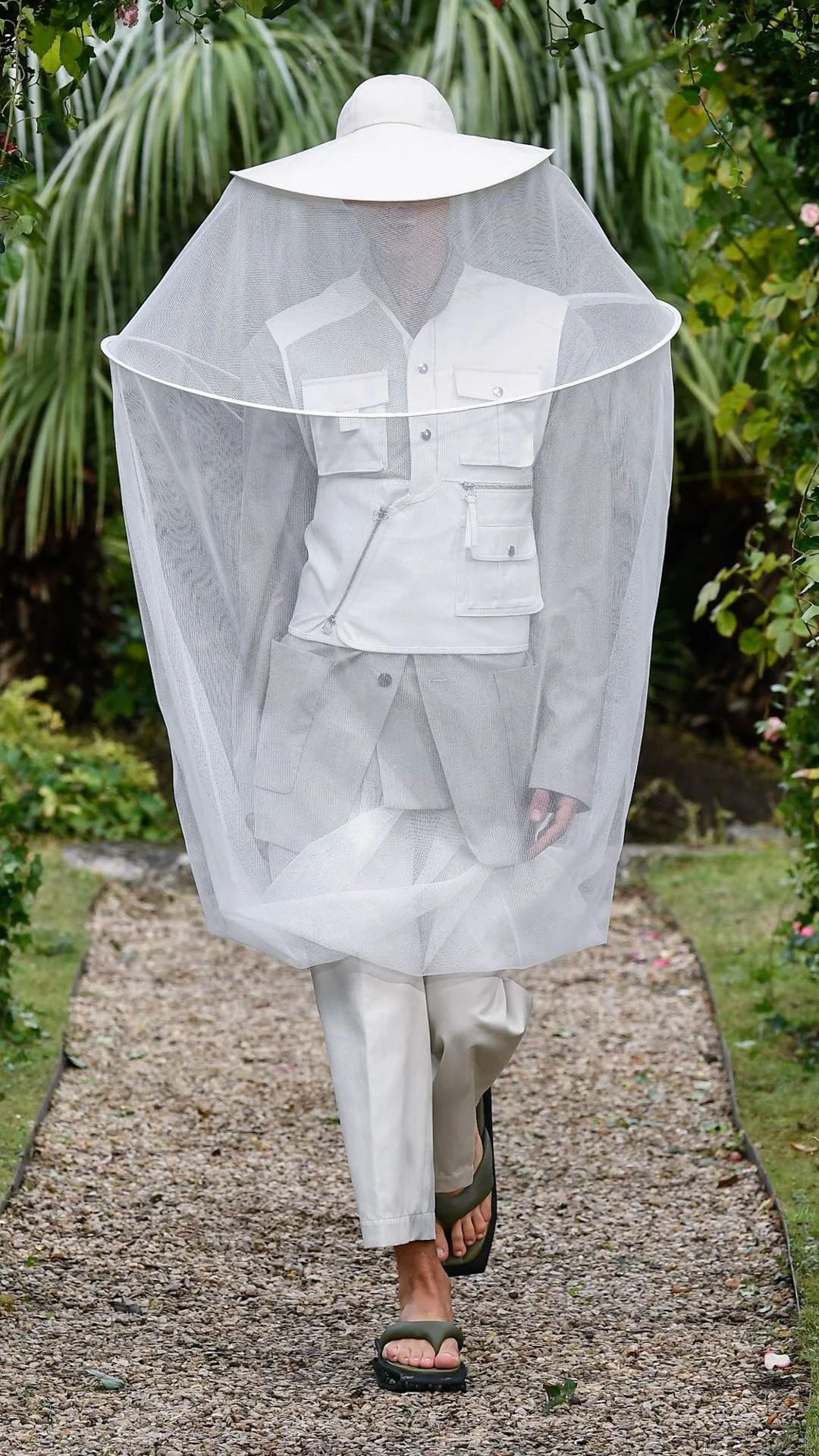
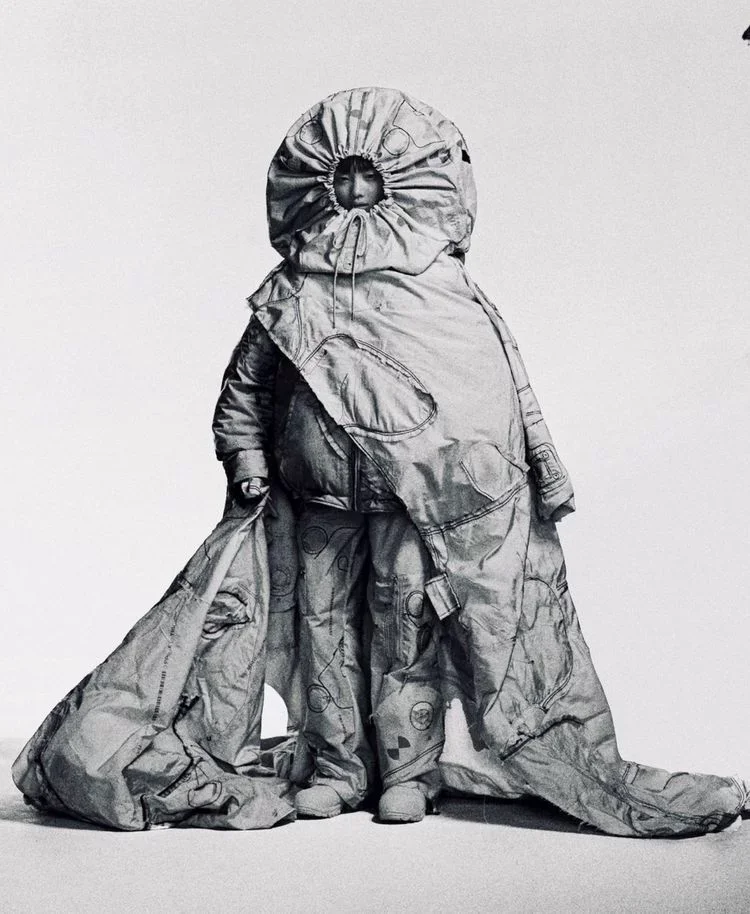
We will design wearable structures that let humans thrive in an imaginary desert future.
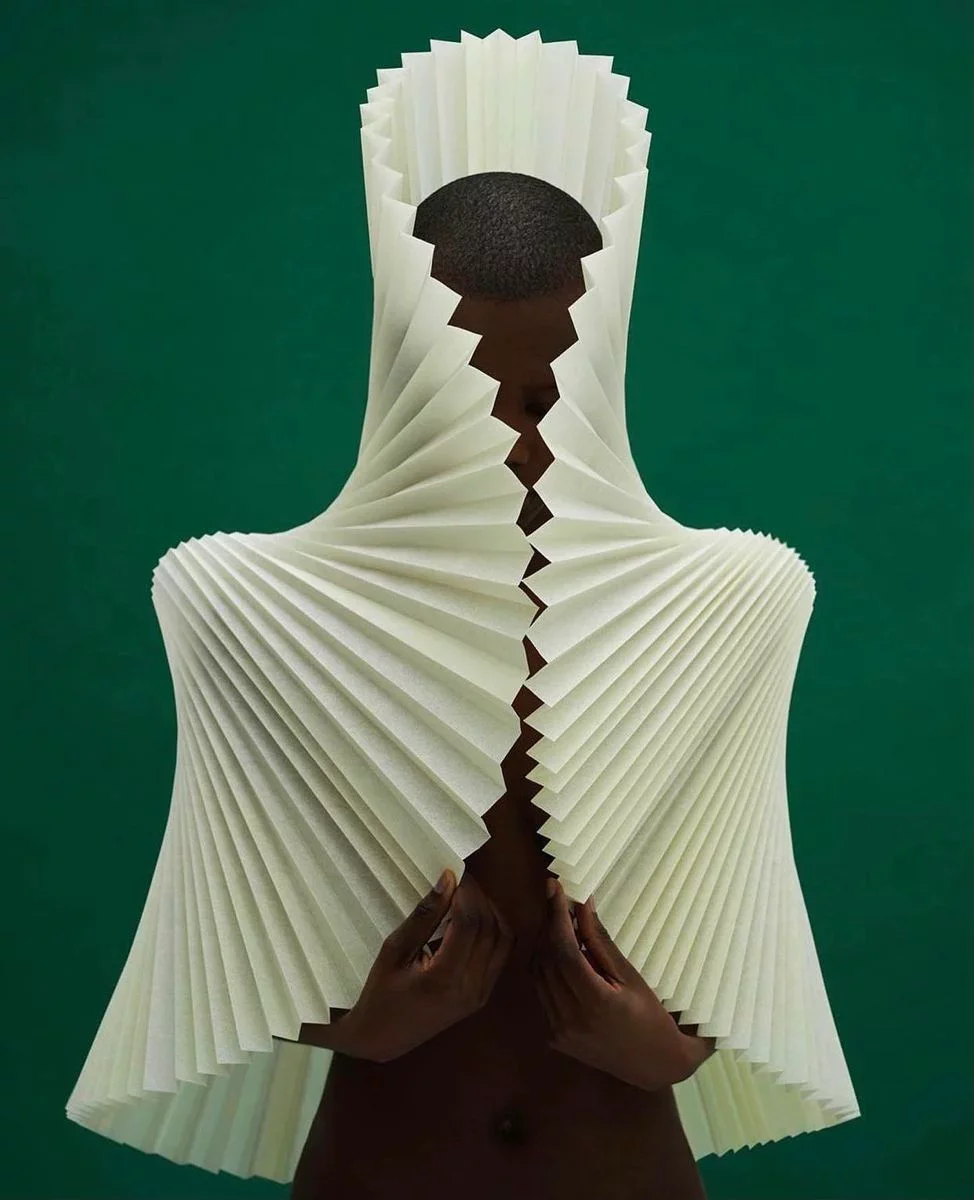
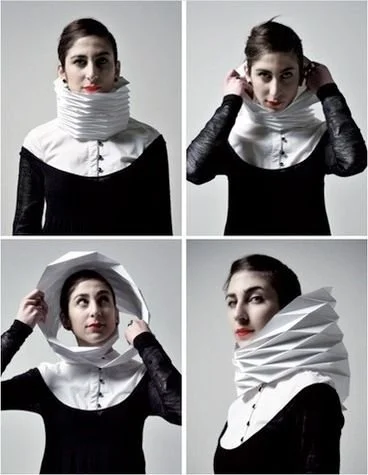
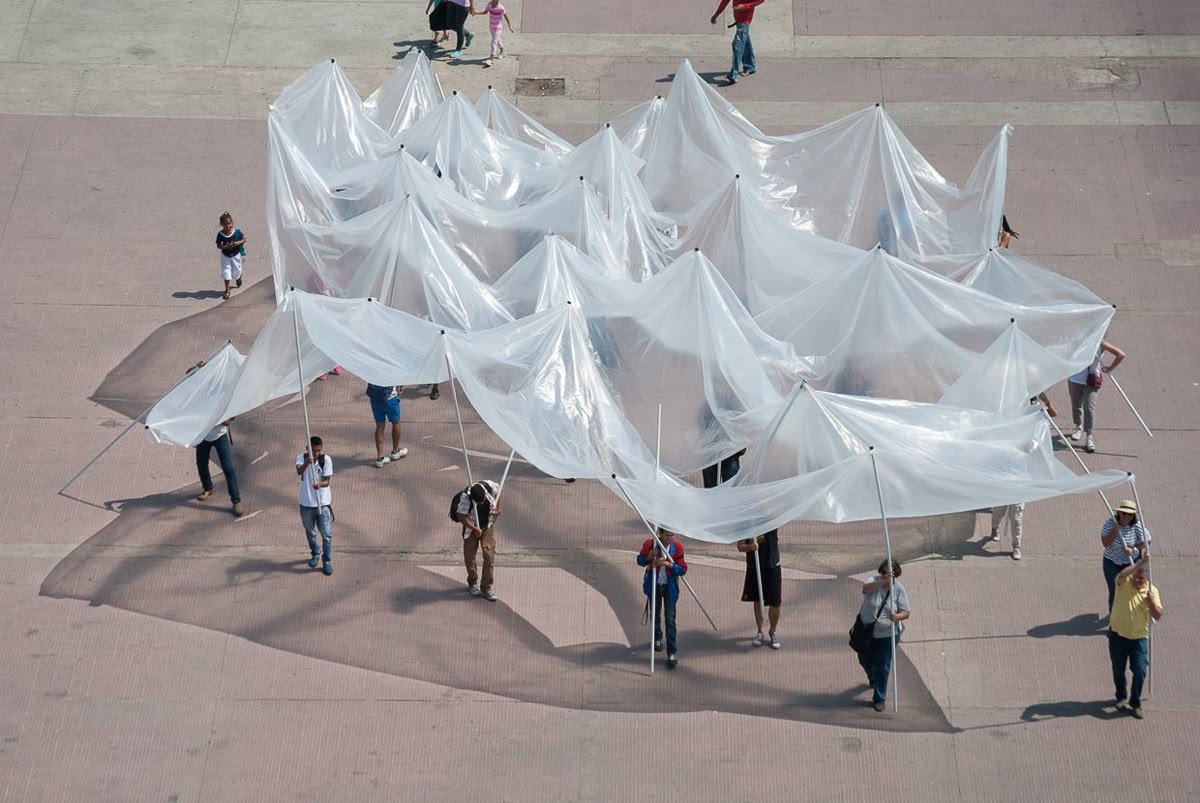
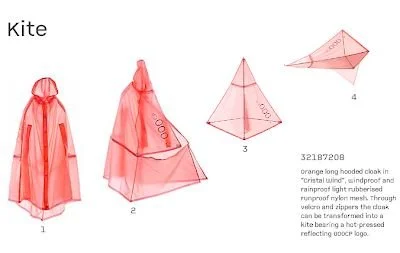
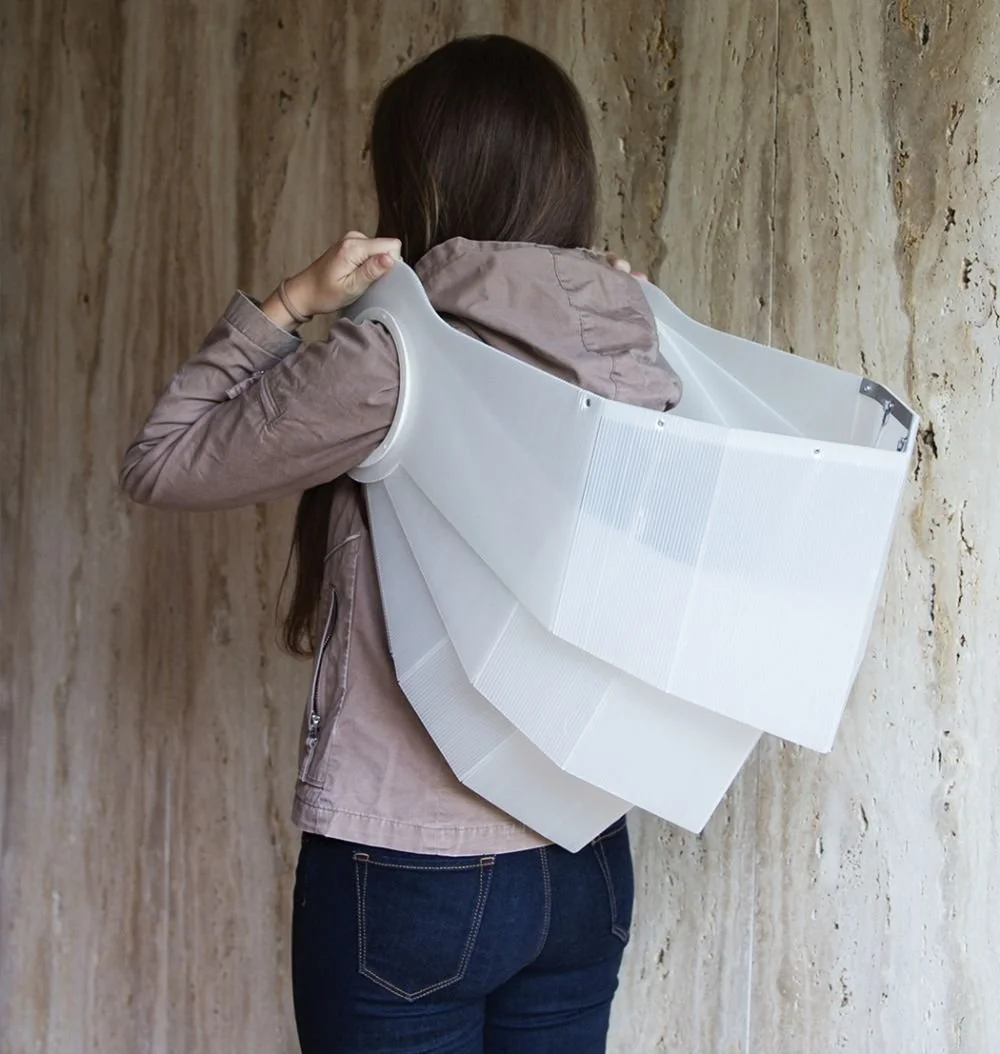
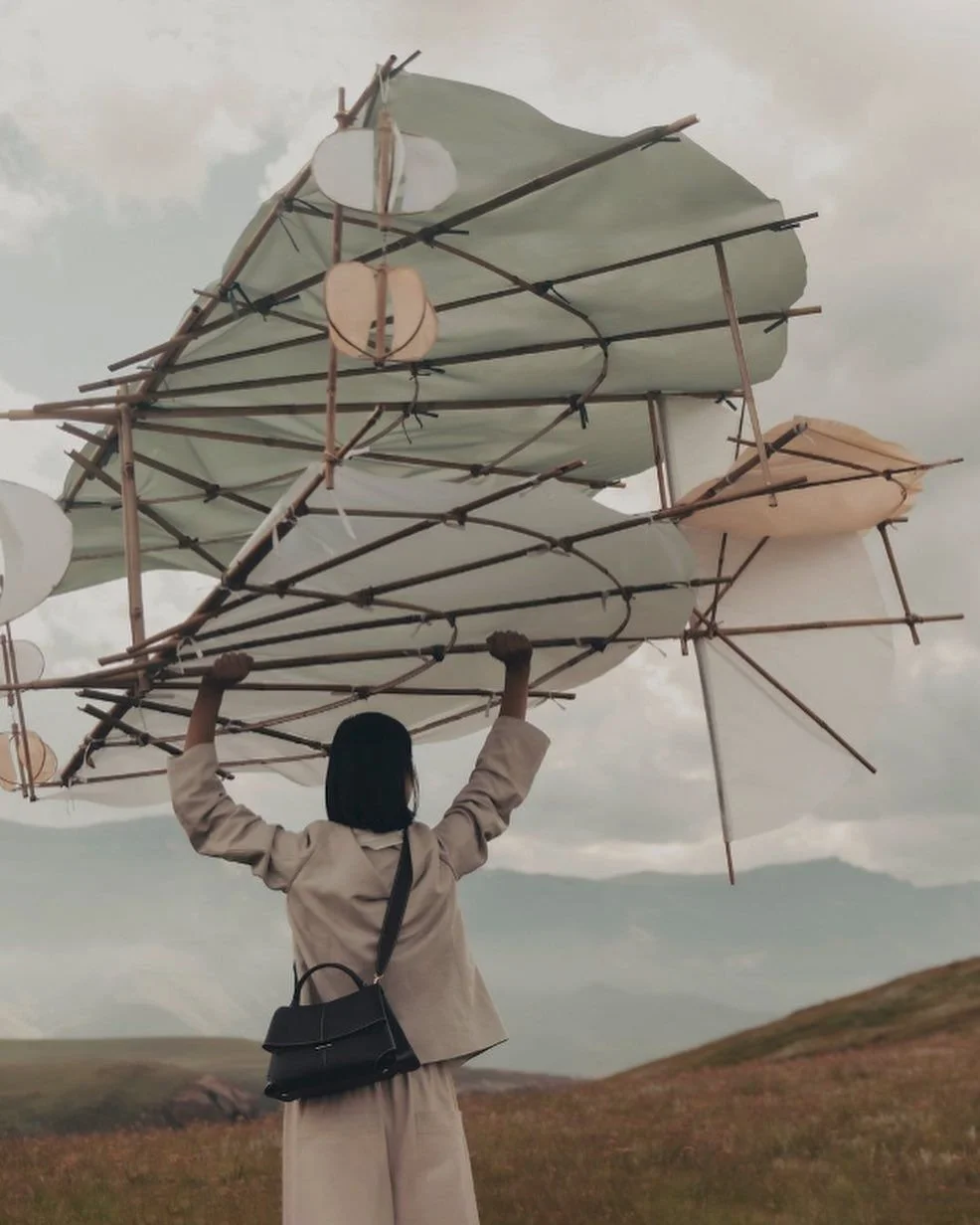
Using folding, bending, layering, and slotting techniques, we will create wearable structures that respond to heat and dust — while also looking cool!
We will also think about ergonomics (how something fits and moves with our bodies) and aesthetics (how something looks and feels visually).
-
Ergonomics, introducing problem solving alongside aesthetics (fashion)
-
Warm up
Colored paper or plain craft paper
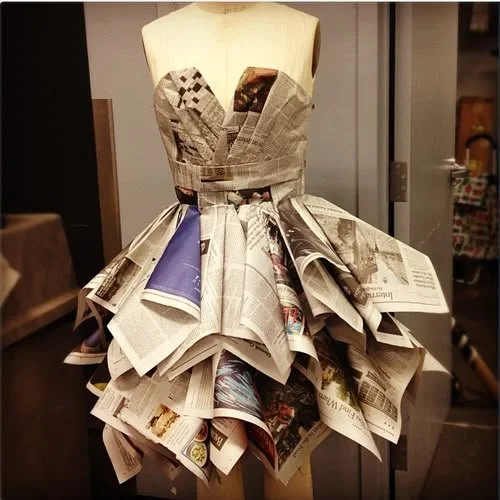
(alternately, print rejects from a print shop, newspaper etc)
A baseboard or paper to work on
Main activity
Added pages to their notebooks + pens, pencils for sketching
Box Cardboard
Craft paper
Cardboard cut into 3” strips, elastic and staplers
Aluminum foil (1 roll)
leftover kebab sticks / palm fronds from ‘Material play’ workshop (ideally something bendy like bamboo / ekel - but I’m not sure what the Sharjah equivalent is… wire?)
Recycled fabric, sheer textiles / material and other recyclables ‘lata 'pata’
scissors, glue, hot glue gun, scissors, string, wire, tape
(optional) A mirror if possible, alternately turn on screen camera so kids can see their outfits
(optional) Are there mannequins leftover from SAT02? just curious
Warm up: 5 minute sculptures
Gather a base board, colored paper, glue & tape
Set a timer for 5 minutes
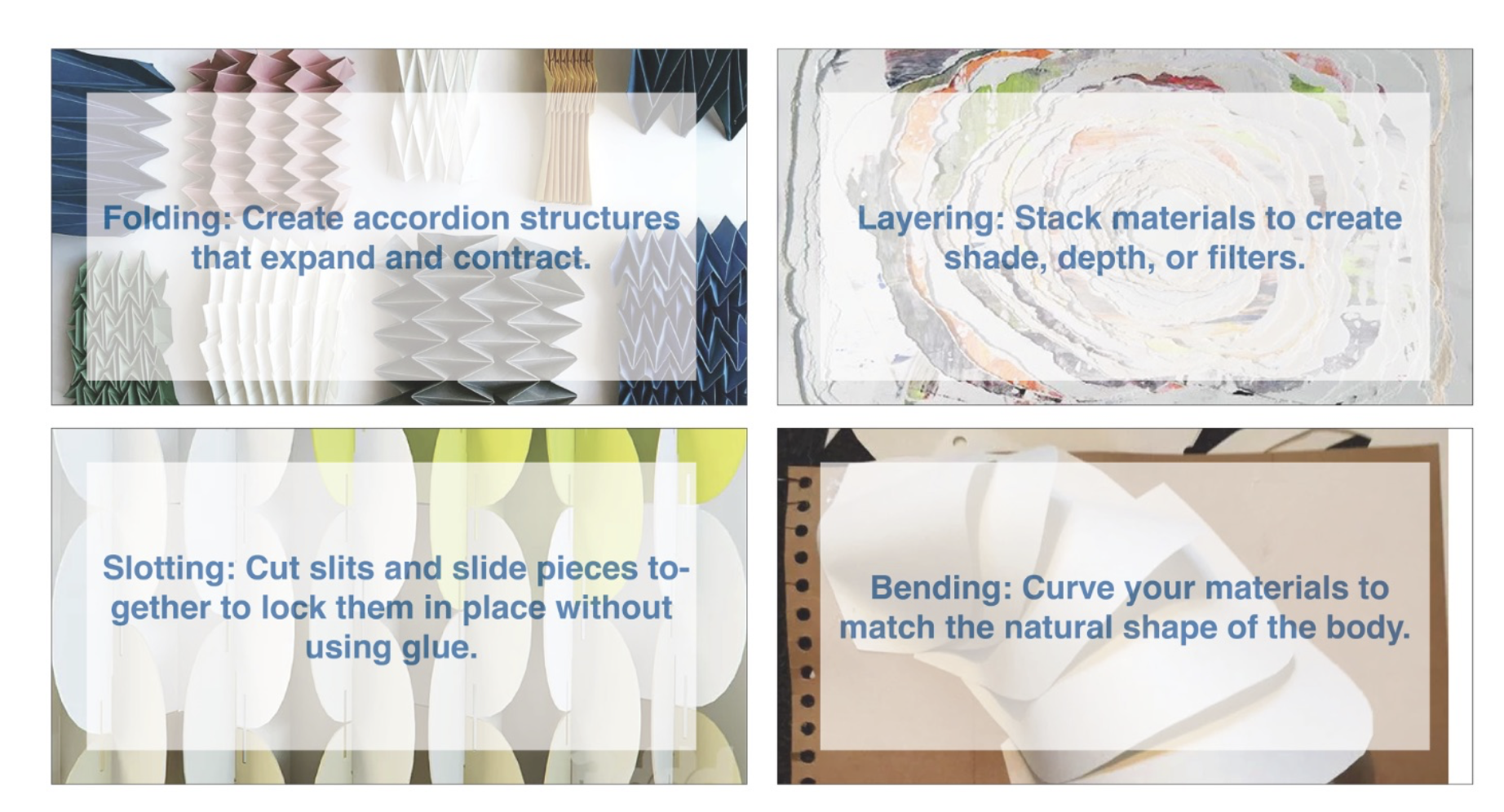
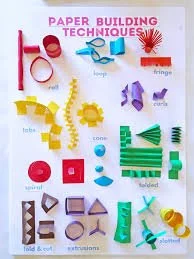
Create a 5 minute sculpture that explores one or more of the following paper construction methods
Folding: Create accordion structures that expand and contract.
Bending: Curve your materials to match the natural shape of the body.
Layering: Stack materials to create shade, depth, or filters.
Slotting: Cut slits and slide pieces together to lock them in place without using glue.
Main Activity:
Design challenge:
Design a wearable device that helps adapt to one of these future desert climate conditions:
1. The Heat-Shield: Reflects the extreme heat away from the body.
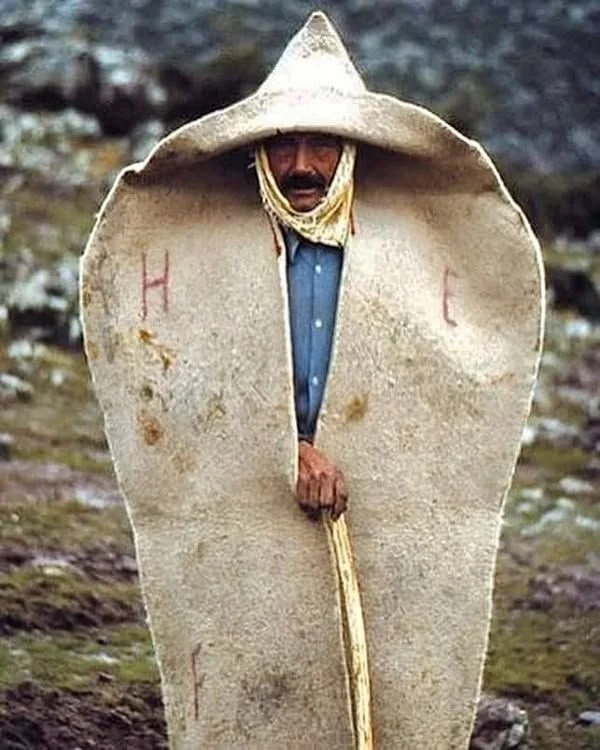
2. The Dust-Buster: Seals and protects eyes, face, or joints from choking dust.
Use folding, bending, layering, and slotting techniques to create a wearable structure that responds to both movement and climate.
Think about ergonomics (how it fits and moves with the body) and aesthetics (how it looks and feels visually).
Step 1: Select & sketch: (10-15 min)
Heat or dust? Which body part will you design for? Head / arm / waist / shoulder / legs / feet? full body?
Sketch your idea on your sketchbook
Step 2: Start building! (30 min)
You will be paired with one partner to test each other’s designs by wearing and moving in them
Start building your wearable design
Step 3: Test by trying on with your partner (10 min)
First quick body test with your partner
BREAK (15 min)
Step 4: Repeat (30-40 min)
Step 5: Final adjustments
Tip:
Use 3-4” cardboard strips, staplers and elastic to create a base ‘belt’ or ‘headband’ on top of which children can design their gear - this way it’ll be removable without getting destroyed.
Conclusion
Wear your designs
Gather at one end of the class
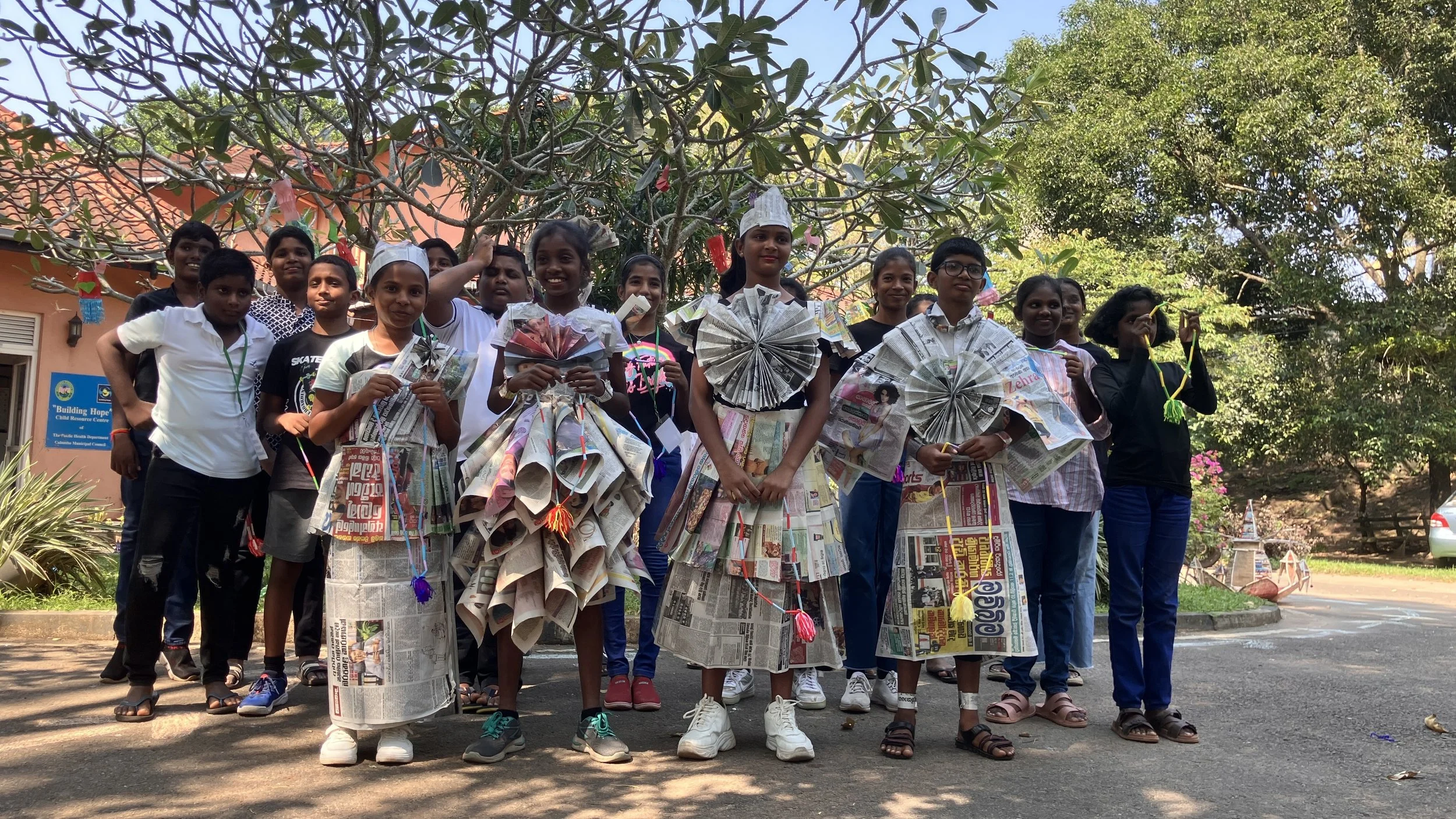
Time for a.. Fashion show & tell with your wearable architecture!
If there’s time, discuss: What were the intentions behind your designs?