
A special workshop on Women, Children and the City
May 10, 2026
A special workshop with Rae Samsudeen & Sulakshi Ratnayake from Everystory
Supported by: Selvachandran Surendran, Tameez Bohoran and Husaina Shabir
Who is Everystory?
Everystory is a Sri Lanka-based feminist collective using storytelling and knowledge sharing to advance Gender Justice. Grounded in intersectional feminist principles, we aim to create a space in Sri Lanka and South Asia that is reflective of our histories, traditions, and cultures while looking towards a more equal and equitable future.
Why Women, Children and the City?
Cities are often designed and discussed by adults, yet children experience them in entirely different ways. A shortcut becomes an adventure, and a busy street can feel exciting, confusing, or unsafe all at once.
As a part of Everystory’s Women in the City program, the children at Building Hope Children's Centre became observers, researchers and designers of the city around them. Through drawing, mapping, discussion and model-making, we explored an important question: Who is the city built for?
More specifically, we looked at how women and children experience public spaces, and how cities can become more inclusive, welcoming and safe for everyone.
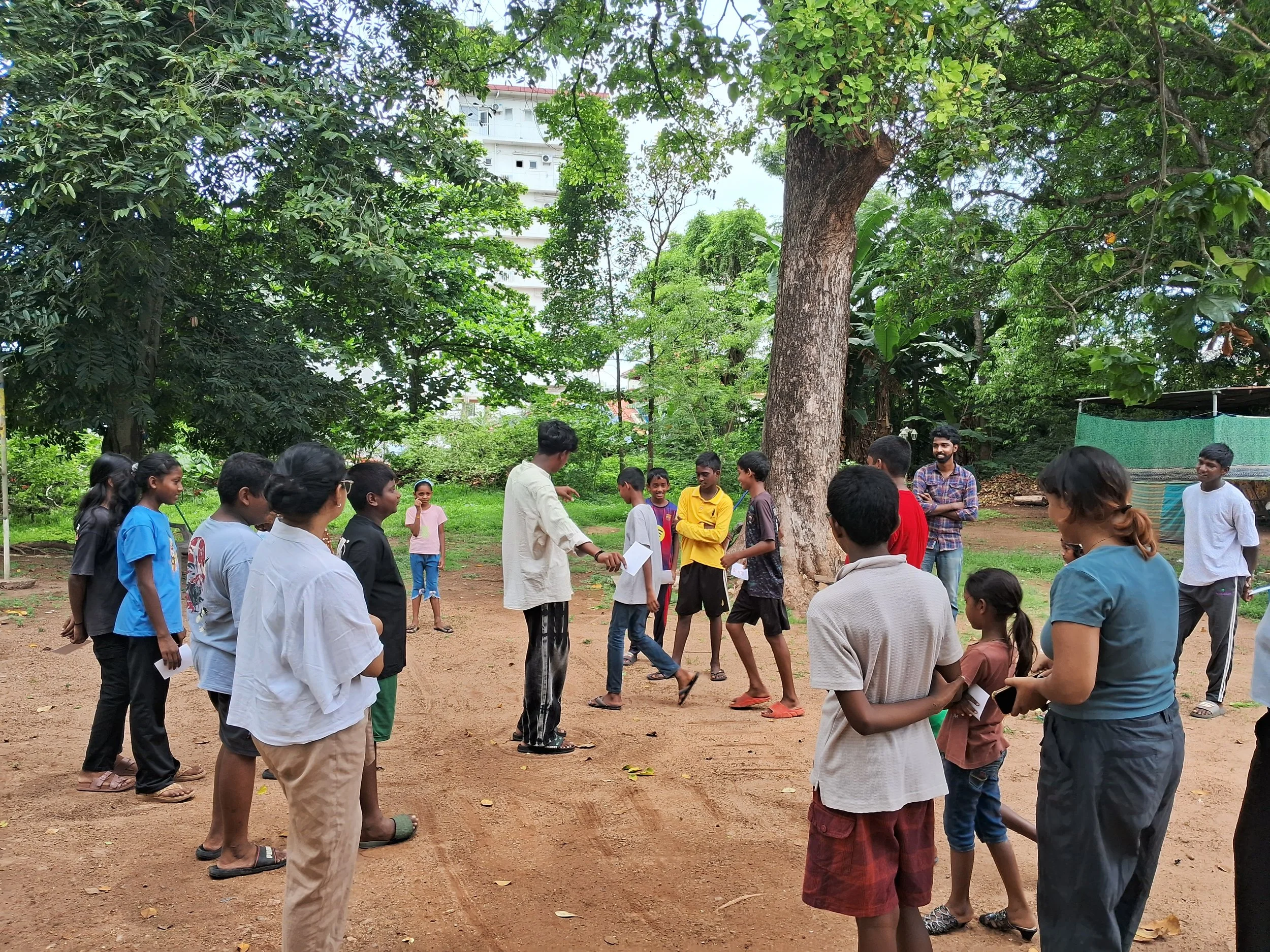
Photo by Everystory
Traffic light!
The workshop began with a fun game of human traffic light!
Outside, my colleague Rae had created a miniature roundabout in the sand, complete with zebra crossings and a centre circle for a human traffic light. Each child picked a piece of paper assigning them a role—cars, buses, pedestrians, or the all-important traffic light.
One of the older children was chosen to direct traffic and ensure everyone moved safely through the roundabout. At first, the children were shy and unsure of how the game worked. However, after a brief demonstration and a few practice rounds, they quickly gained confidence and embraced their roles with enthusiasm. After five rounds, we headed back indoors to begin the workshop activities.
Observations
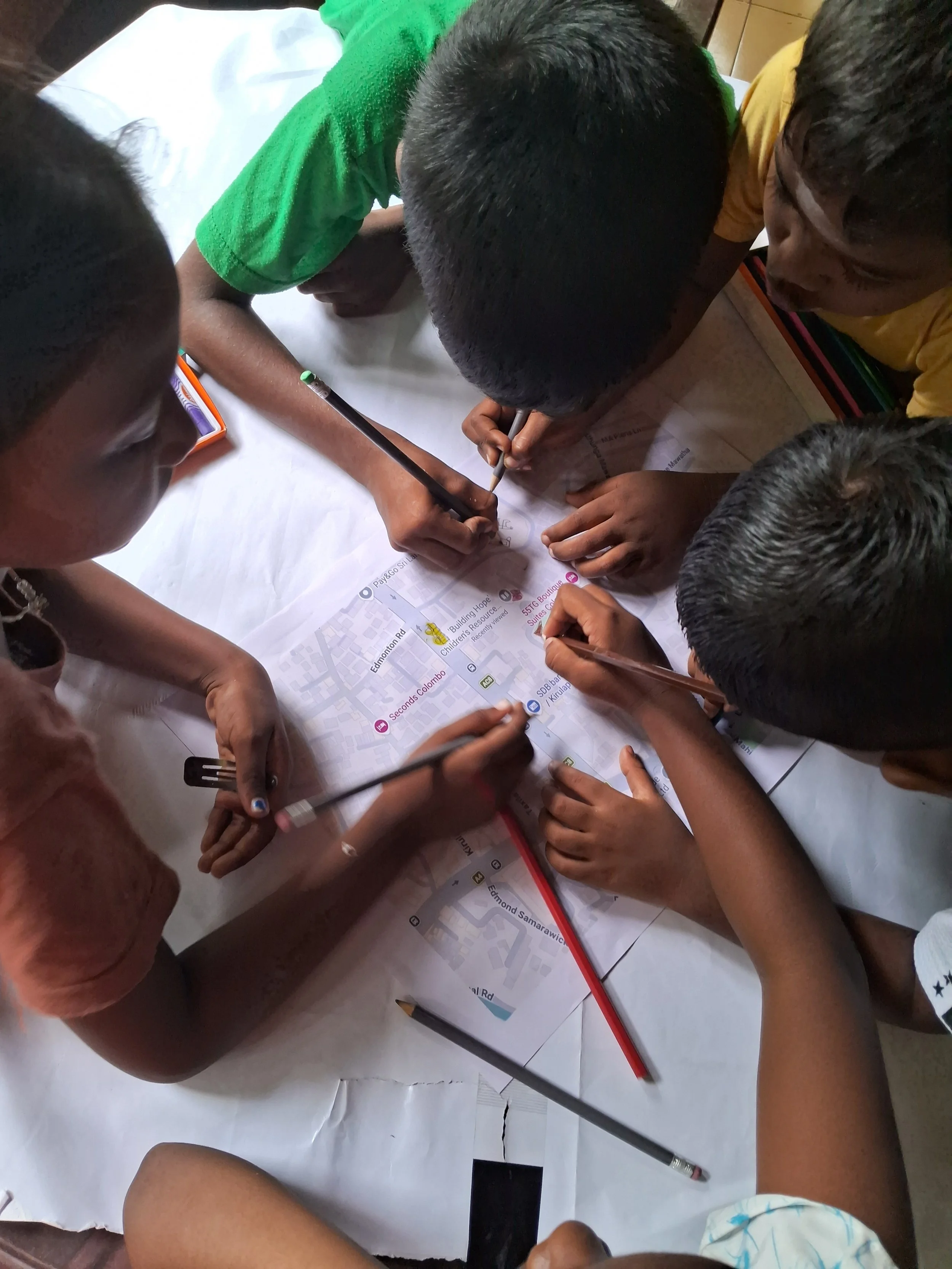
Photo by Everystory
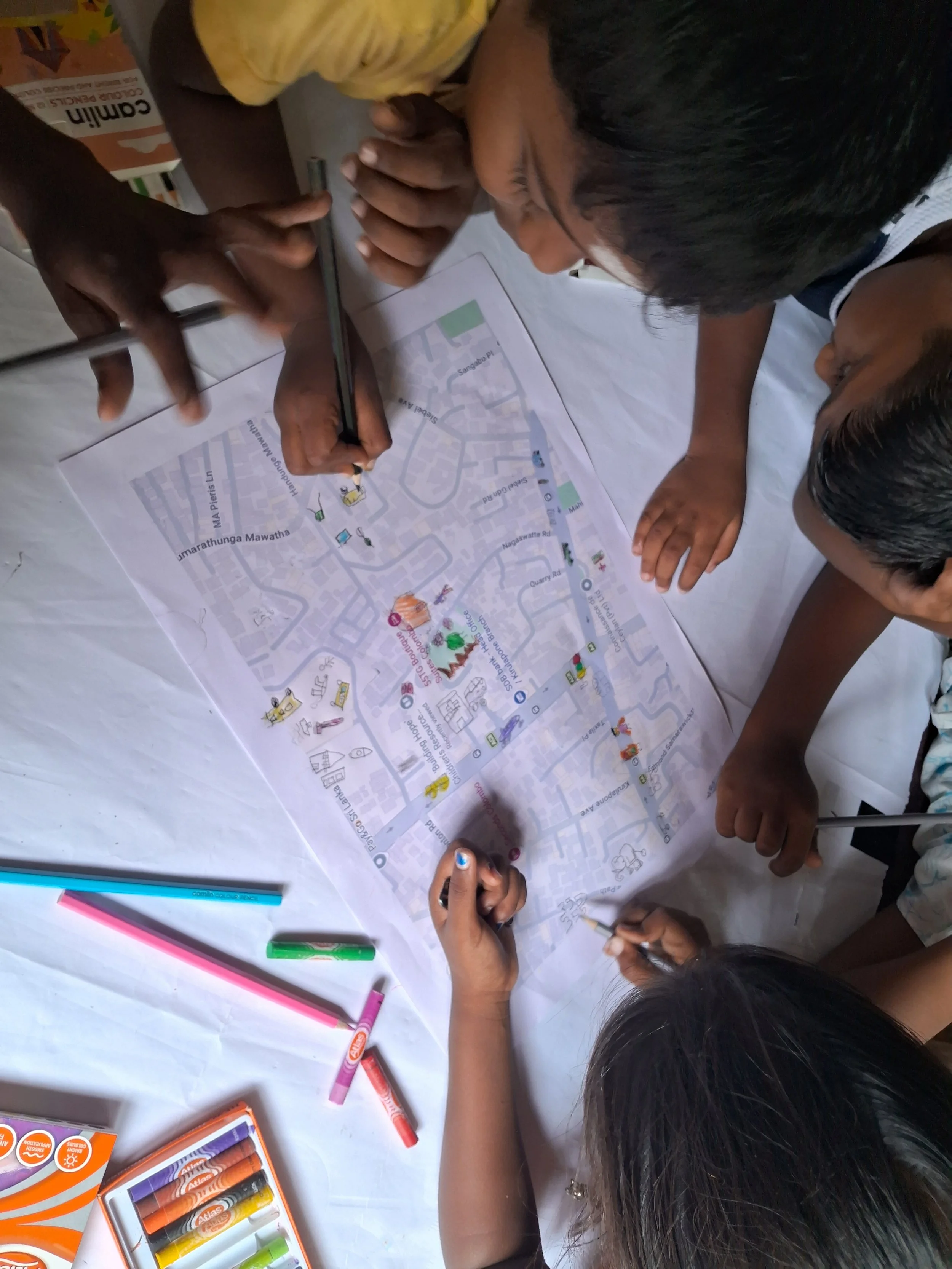
Photo by Everystory
We started with a simple exercise in observation. Students were asked to think about places they visit every day: roads, bus stops, playgrounds, shops, schools and parks. What makes them enjoyable? What makes them difficult to use? Are there places where children feel comfortable spending time? Are there places they avoid?
At first, the answers came slowly and with a bit of hesitation.
"The road is too busy."
"There is nowhere to sit."
"There are too many vehicles."
As the discussion continued, the observations became more detailed and a little more confident. The children began noticing more things that were hindering their enjoyment: the lack of shade on a hot day, narrow sidewalks, broken pavements and places where younger children could not safely cross the road,
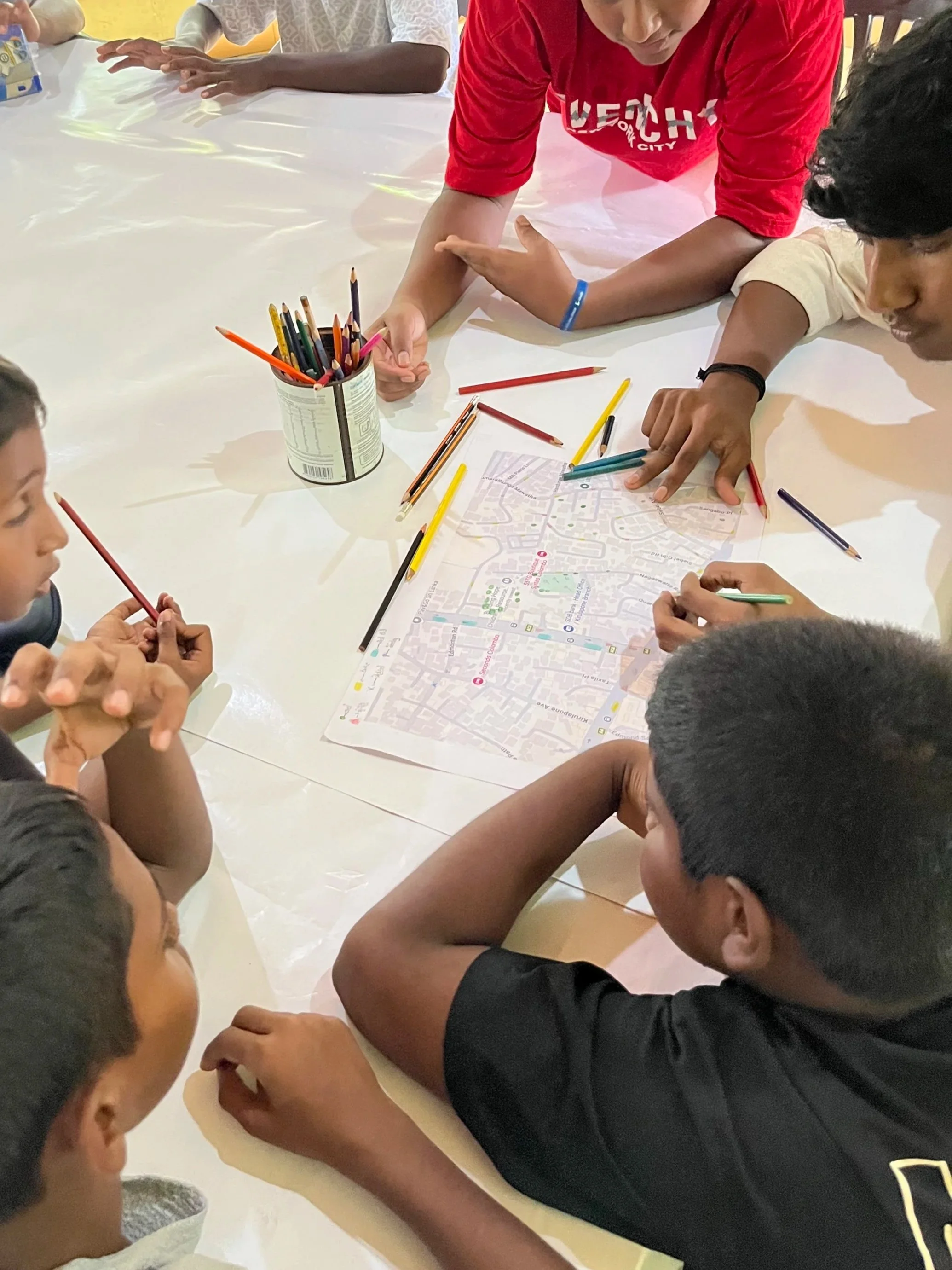
Photo by Everystory
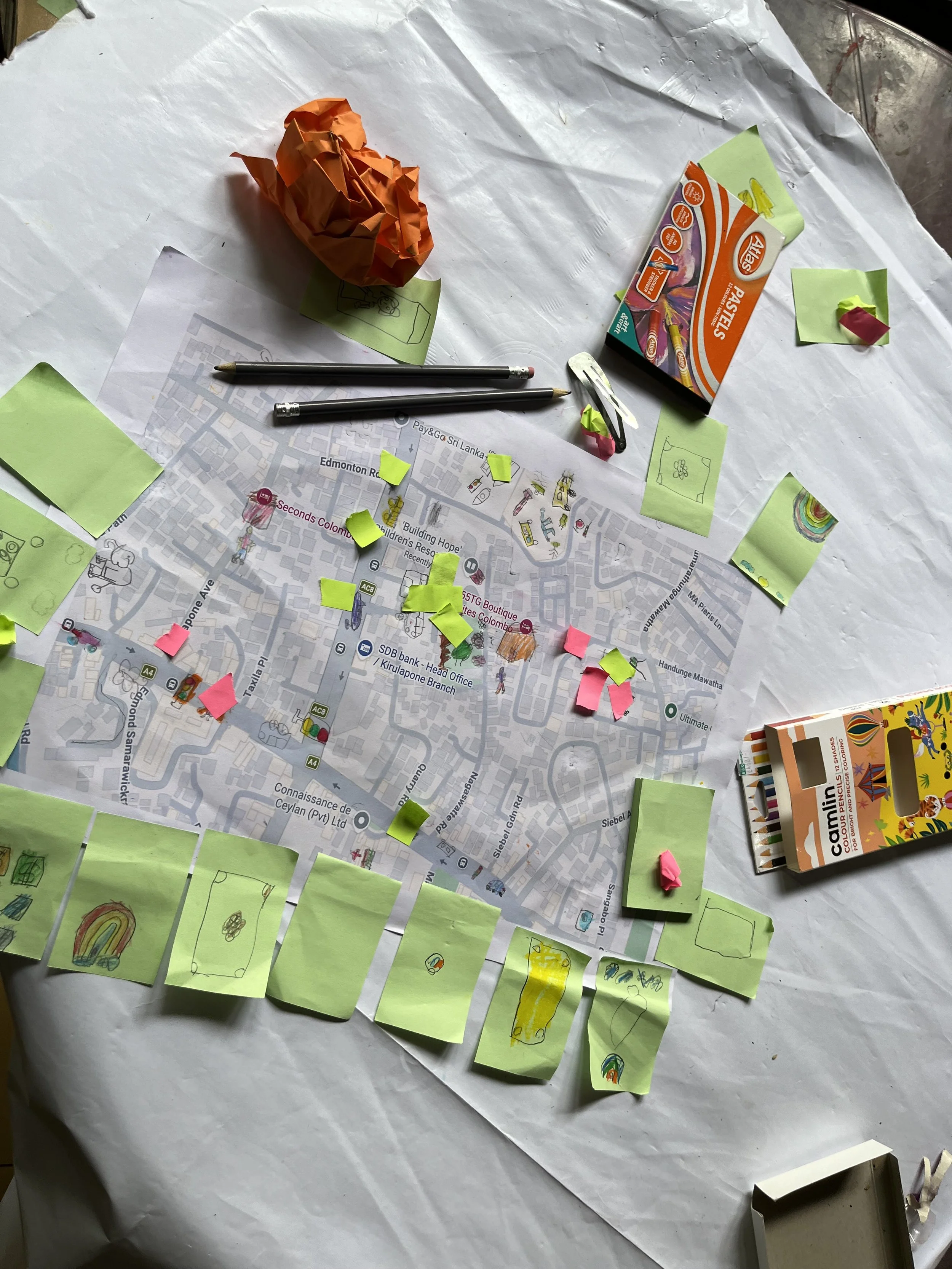
Photo by Everystory
Ideation
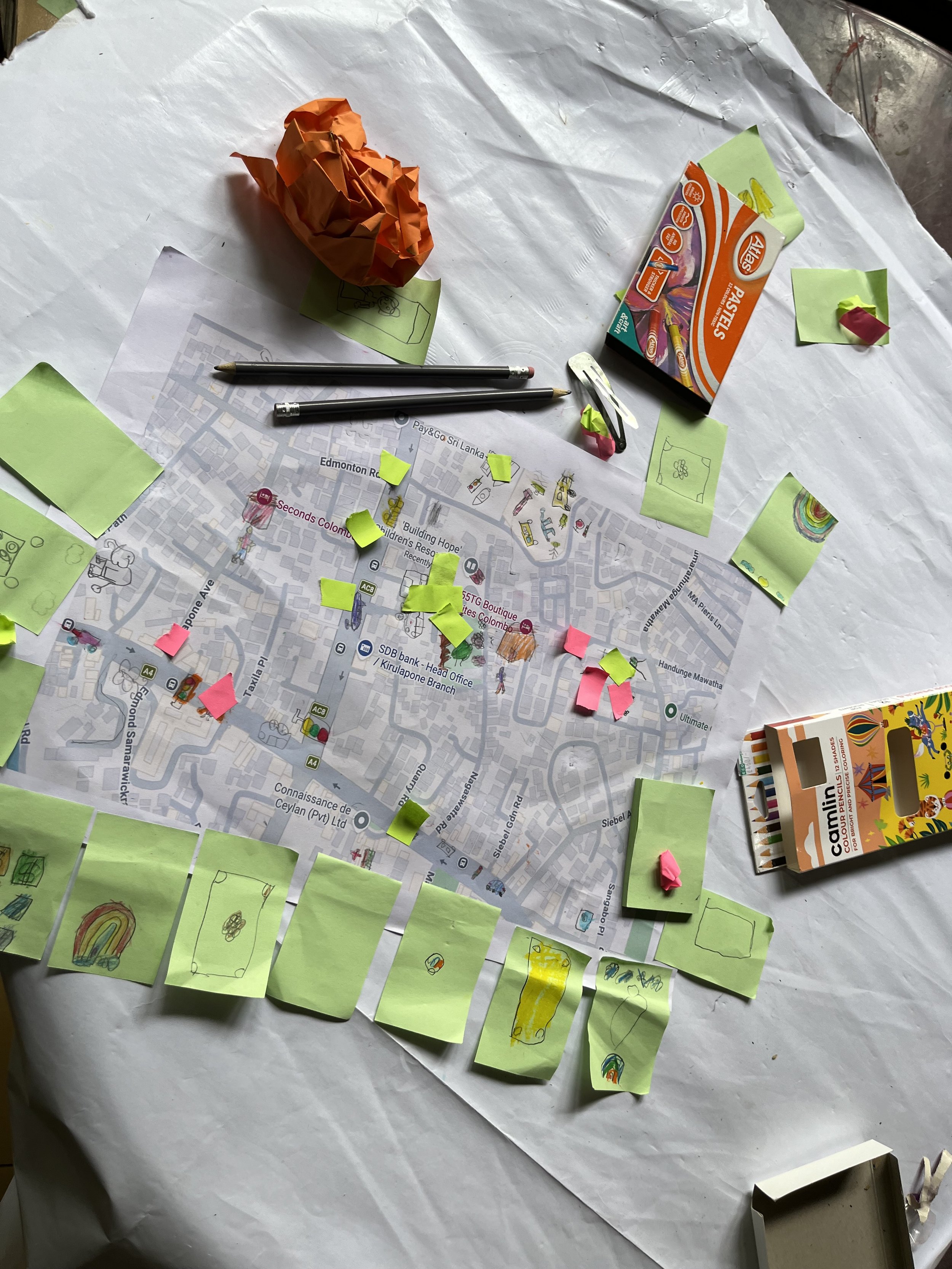
Using large printed maps of the surrounding area, the children documented their ideas through drawings and annotations. Some carefully added familiar landmarks, while others incorporated imaginative elements such as rockets and dragons.
They then used green and red stickers to identify places they liked and disliked.
Rather than creating technically accurate plans, the children focused on capturing their experiences of the city. What emerged was a fascinating collection of personal geographies. Many children noted down the playground and community centre as areas that they like.
The same street could be interpreted in completely different ways depending on who was drawing it. By comparing their maps, the children began to understand that cities are not experienced equally by everyone.
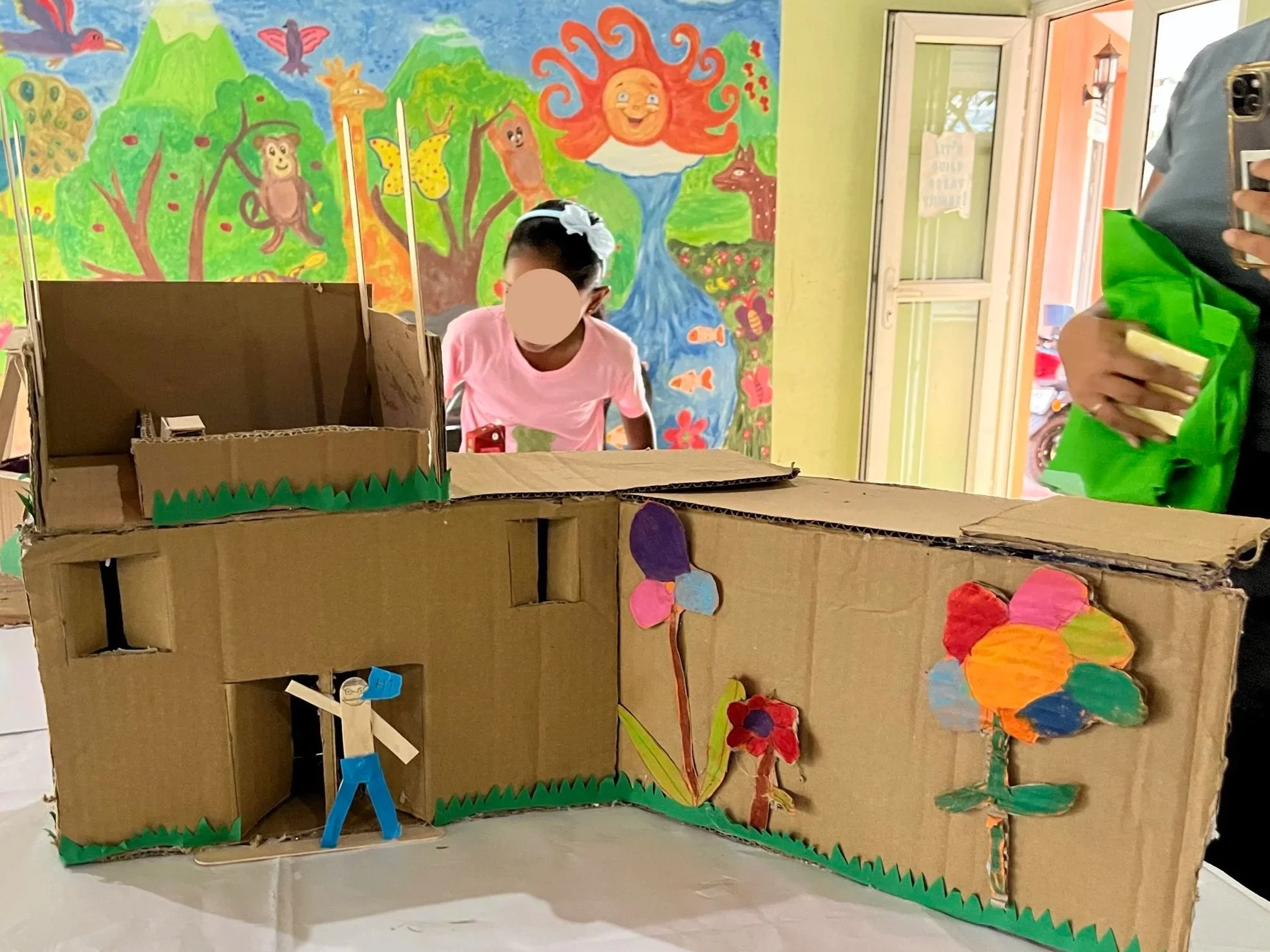
Photo by Everystory
The next challenge was to reimagine these spaces.
Working in groups, students proposed changes that would improve everyday life for women and children. Ideas included wider pavements, safer pedestrian crossings, community gardens, playgrounds integrated into neighbourhoods, better lighting and public seating.
Many students focused on creating opportunities for interaction. Rather than designing isolated buildings, they imagined spaces where people could meet and play together.
The final stage involved transforming ideas into physical models.
Using simple craft materials, students constructed miniature versions of their proposals. Both groups decided to revamp the local community centre.
As always, the process of making revealed new questions.
Would there be enough room for different activities? How would people move through the space? Where should trees and flowers be planted? What happens when many different ideas and needs must be accommodated within the same place?
Spaces CAN be shaped by the people who inhabit them.
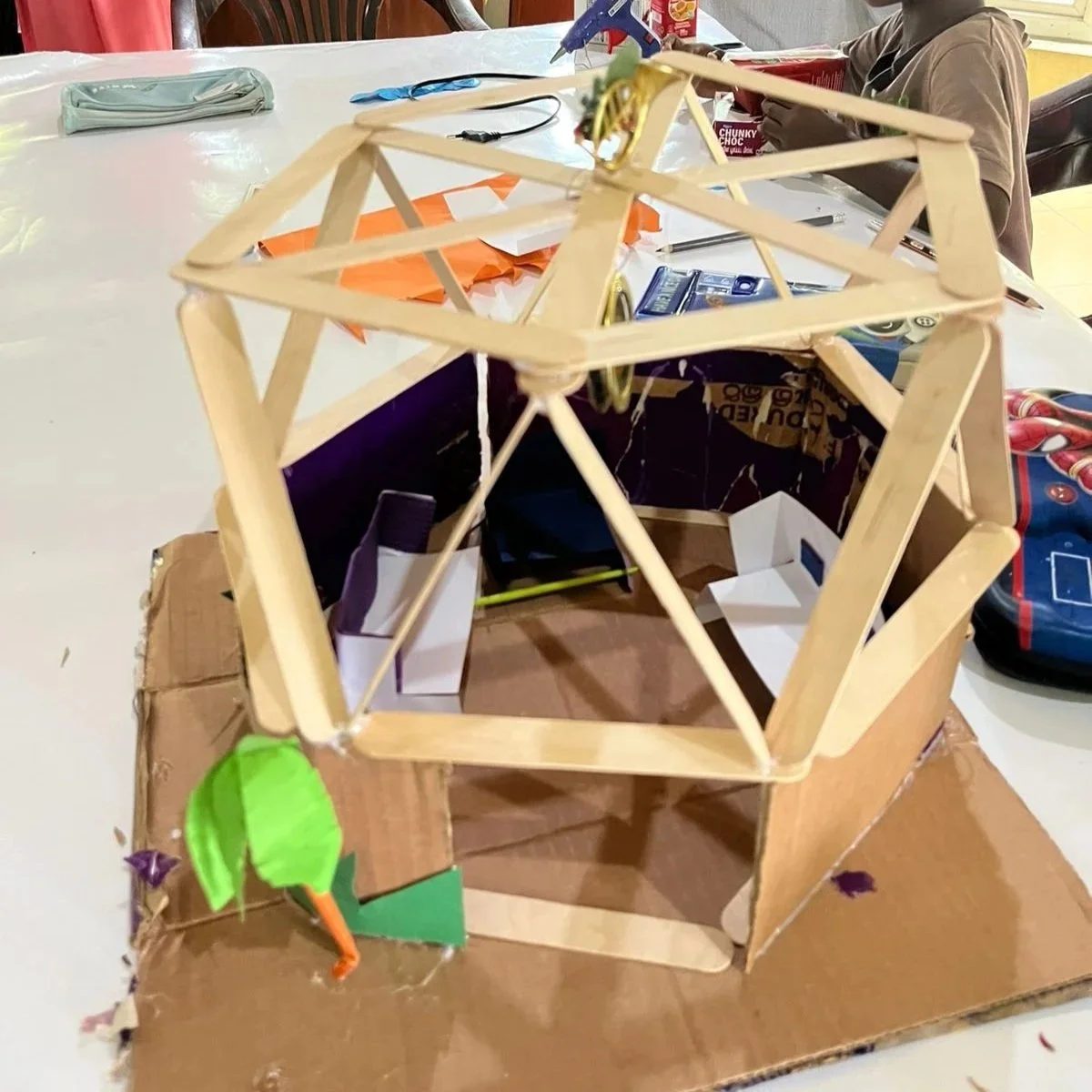
Photo by Everystory
One of the most rewarding aspects of the workshop was watching students consider perspectives beyond their own. By discussing the experiences of women, younger children and elderly people, they began to recognise that good design often starts with empathy and understanding. The ideas generated during the session ranged from practical improvements to wonderfully imaginative proposals, like an impressive spherical roof design constructed on the model with popsicle sticks. Yet they all shared a common theme: the belief that spaces can be shaped by the people who inhabit them. The most exciting outcome of the workshop was the realisation that even the youngest citizens of our city have valuable insights to offer.